
17 Learning Consistency Tips That Actually Work in 2026

Table of Contents
Introduction
You bought the course. Made the plan. Told yourself this time would be different.
And yet three weeks pass and you're back where you started, looking at incomplete modules and feeling like you've failed again.
I know that feeling. I've lived it myself.
Foundation Tips Everyone Misses (Tips #1-6)
Tip #1: Consistency Is a Tool, Not a Moral Test
Stop beating yourself up. Missing a study session doesn't make you lazy. It makes you human.
According to consistency as a practical tool, viewing consistency as a practical strategy rather than a character judgment changes everything.
Use consistency strategically for specific goals. Don't treat it as proof of your worth. When you miss a day, you haven't failed morally. You've just encountered a data point about what didn't work.
Tip #2: Avoid the False First Step Trap
You know what I'm talking about. Buying the perfect planner. Reorganizing your desk. Downloading six productivity apps.
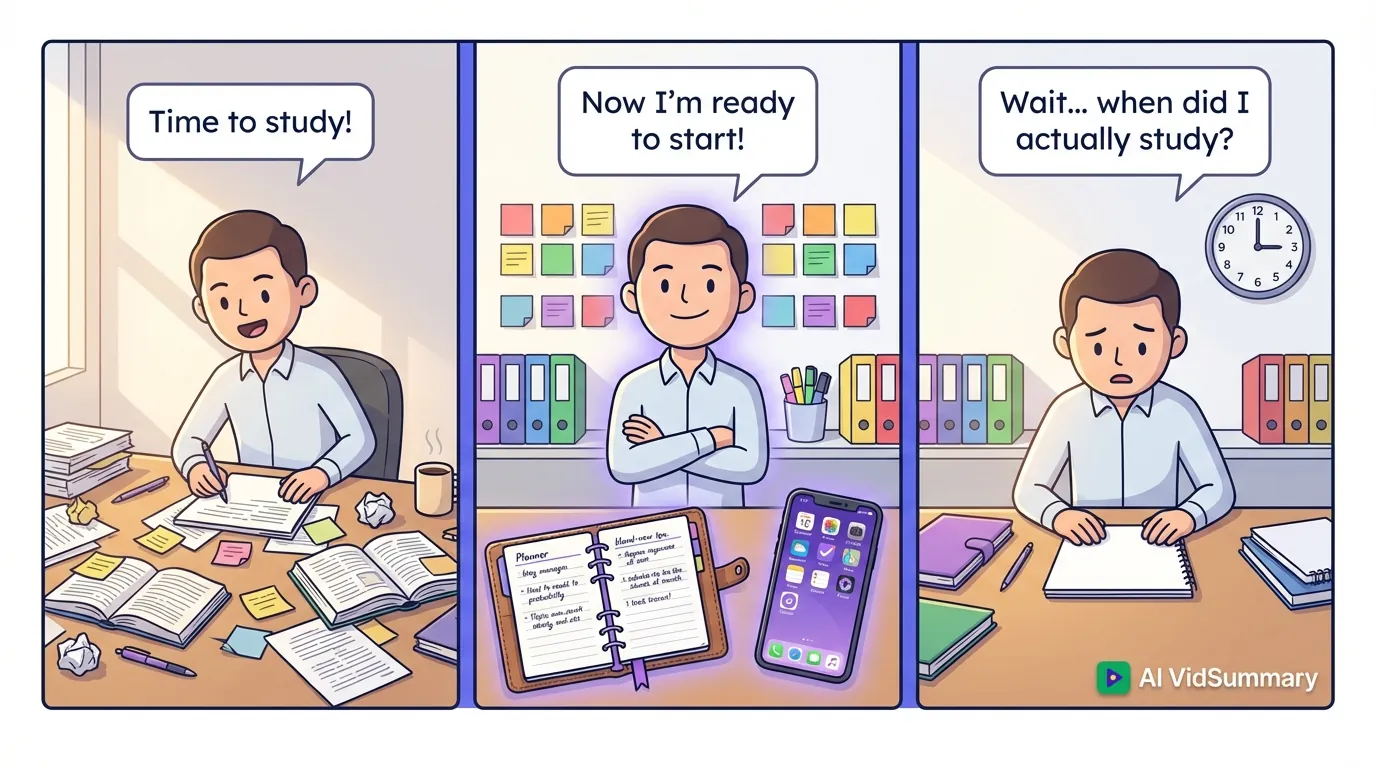
These feel productive. They're not. They're false first step trap procrastination dressed as progress.
You're spending money and time instead of actually studying. Stop preparing to work. Just work.
Tip #3: Start Embarrassingly Small
Jordan Kunde-Wright, a certified personal trainer, identifies "setting unrealistic or overly difficult goals" as a primary consistency killer. Your brain knows when you're lying to yourself. Promising to study three hours daily when you haven't studied in months? That's self-sabotage.
Start with five minutes. Literally five minutes. It feels ridiculous. That's the point. Five minutes beats zero minutes every single time.
Tip #4: Process Learning Materials Efficiently
Time scarcity kills consistency faster than motivation ever will. You can't study consistently if every lecture takes hours to process. study smarter strategies emphasizes working smarter, not harder.
For video lectures specifically, tools like AI VidSummary can turn a two-hour YouTube lecture into a three-minute summary. You get the key points without the time sink. That's not cheating. That's being strategic with the hours you actually have.
Tip #5: Accept That Boredom Is Part of the Deal
A renowned athletic coach told James Clear: "At some point it comes down to who can handle the boredom of training every day, doing the same lifts over and over and over."
Learning isn't always exciting. Most days it's repetitive. Same flashcards. Same practice problems. Same review sessions.
The people who succeed aren't more motivated. They're better at tolerating boredom. Fall in love with the boring work. Or at least make peace with it.
Tip #6: Consistency Looks Different for Everyone
Don't copy someone else's 5am routine if you're not a morning person. Don't force daily studying if your schedule genuinely doesn't support it. Your consistency doesn't need to look like anyone else's.
Define what consistency means for YOUR life. Maybe it's weekdays only. Maybe it's three focused sessions weekly. Maybe it's fifteen minutes during lunch breaks. All of those count.
Habit Formation Strategies That Stick (Tips #7-11)
Tip #7: Use the Cue-Craving-Response-Reward Framework
James Clear's habit formation framework functions because it aligns with actual brain mechanics. Four elements matter: cue, craving, response, and reward.
Connect studying to a daily cue you already have. Morning coffee finished? Open your notes. Dinner done? Review flashcards. The cue sparks the craving. The craving powers the response. The response generates the reward. MIT research on basal ganglia activity demonstrates habits need immediate rewards at completion to solidify. Long-term benefits alone? They don't work.
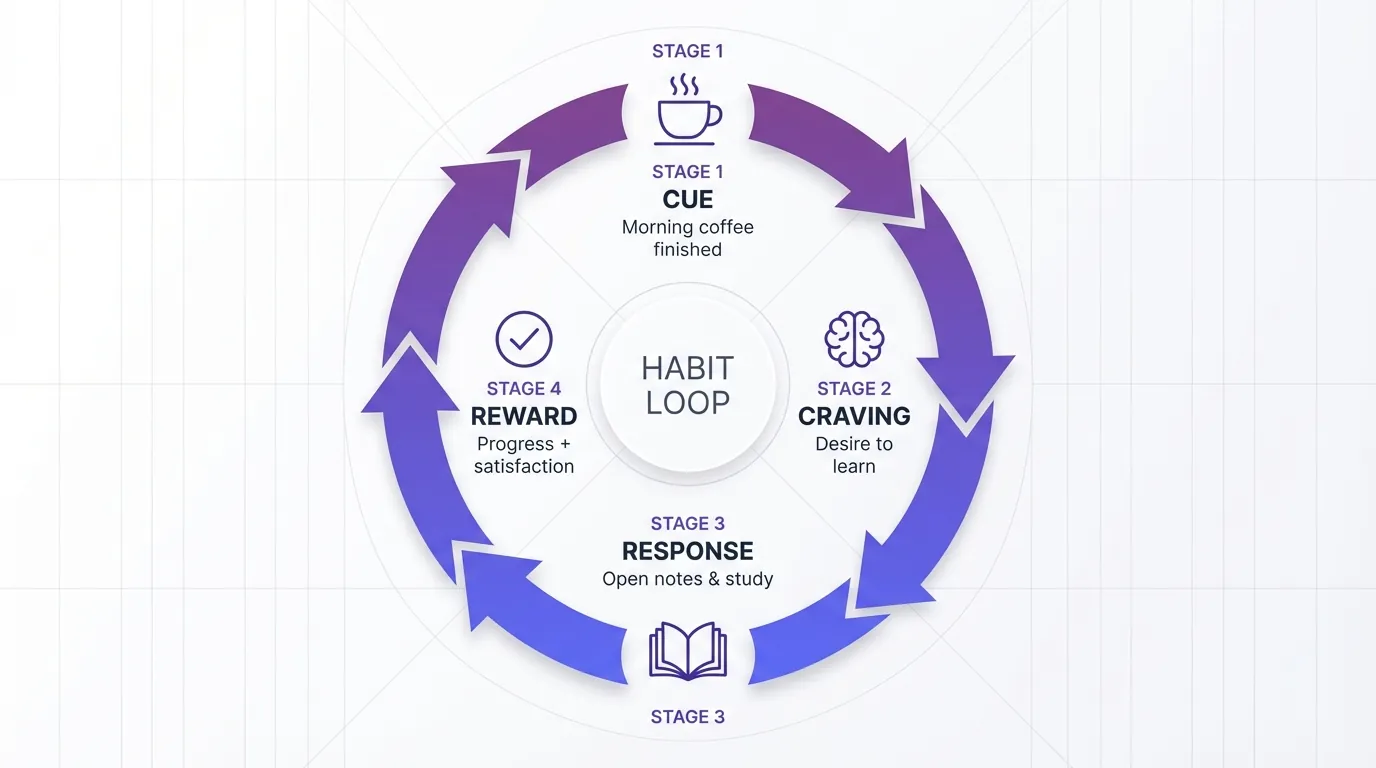
Build small rewards into each study session. Five minutes of a favorite show. A particular snack. A check mark on your calendar.
Tip #8: Exploit the Zeigarnik Effect
Psychologists studying the Zeigarnik Effect discovered "it seems to be human nature to finish what we start and, if it is not finished, we experience dissonance."
Your brain despises incomplete tasks.
Apply this knowledge. Commit to just five minutes. Once you begin, your brain pushes you to keep going. The discomfort from stopping mid-task frequently carries you through the entire session.
Tip #9: Build Supporting Infrastructure Habits
Your primary habit requires supporting habits to last. You can't study reliably without adequate sleep. You can't concentrate without organized materials. You can't sustain energy without basic self-care.
According to best study habits for 2026, solid infrastructure strengthens habit resilience. Prepare your study space the night before. Keep materials organized. Guard your sleep schedule.
For organizing learning materials from multiple sources, AI VidSummary templates can help structure information consistently. The smoother your infrastructure, the less resistance you encounter.
Tip #10: Use Visual Tracking to Build Your Chain
Jerry Seinfeld told a young comic: "The way to be a better comic was to create better jokes and the way to create better jokes was to write every day." He marked an X on a calendar for every day he wrote. "After a few days you'll have a chain. Just keep at it and the chain will grow longer every day."
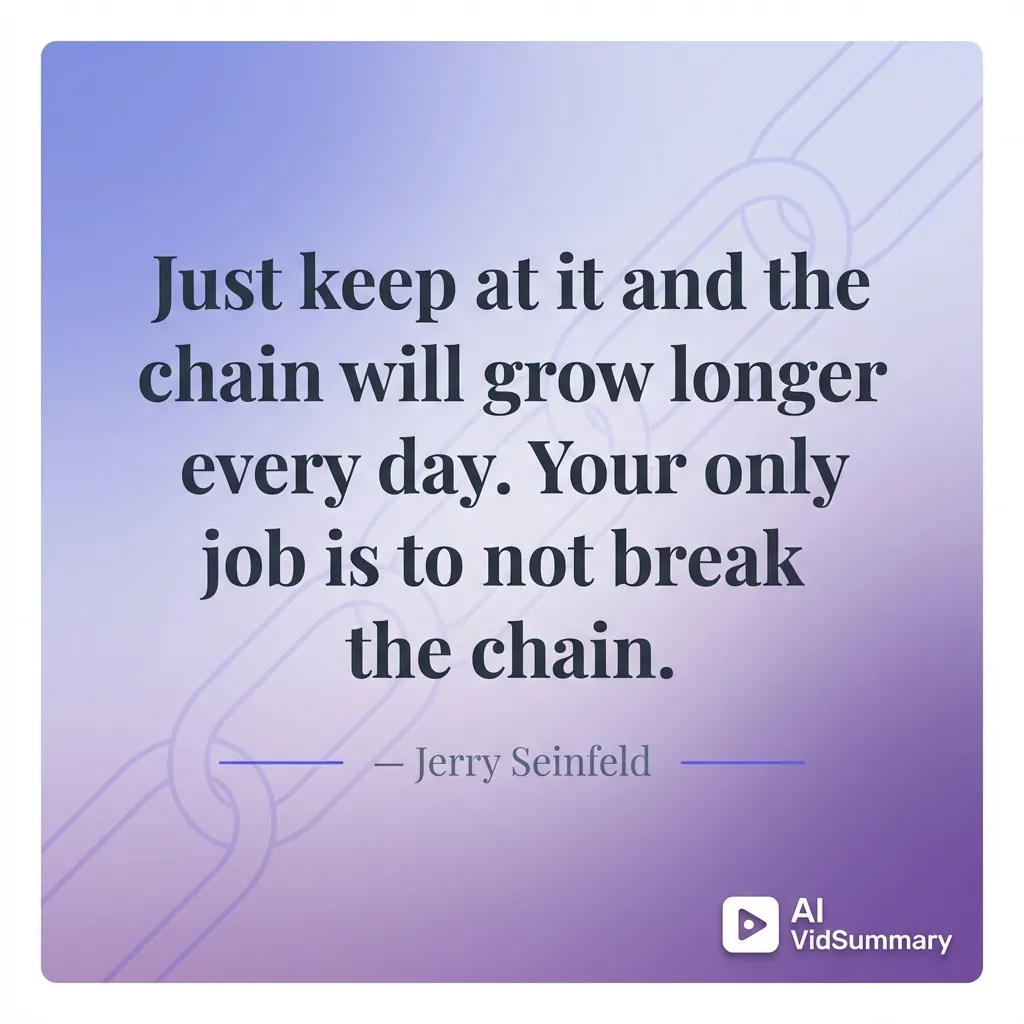
Your single job is not breaking the chain. Get a calendar. Mark each study day. Watch the chain extend. The visual momentum generates time management and study habits serious psychological motivation.
Tip #11: When You Miss, Don't Miss Twice
James Clear's principle: "Don't miss twice." Missing once is an accident. Life happens. You get sick. Work explodes. Plans change.
Missing twice is a pattern. Twice transforms into a habit of not doing the thing. Get back on track right away. No guilt. No shame. Just resume.
Mental Barriers and How to Overcome Them (Tips #12-14)
Tip #12: Recognize Mental Fatigue as the Real Enemy
Mike Silverman, a certified personal trainer, notes: "And it's generally not physical fatigue; it's mental fatigue."
You're not too tired to study. You're mentally exhausted from decision fatigue, anxiety, and comparison. The mental fatigue and consistency psychological barriers outweigh physical ones. Silverman adds: "The only one who cares most about you is you." Your competition is yourself, not social media standards.
Reduce decisions. Use the same study time daily. Same location. Same setup.
Tip #13: Stop Comparing Your Behind-the-Scenes to Others' Highlight Reels
Someone's Instagram story shows their perfect study setup and four-hour deep work session. What you don't see: they studied once that week. Or they're lying. Or their life circumstances are completely different from yours.
Tip #14: Balance Consistency with Rest and Recovery
Consistency doesn't mean grinding every single day until you collapse. It means sustainable rhythm over time. overcoming perfectionism emphasizes that strategic rest preserves long-term sustainability.
Schedule breaks. Take vacations. Rest when you're genuinely exhausted. Consistency survives because you build recovery into the system.
Advanced Techniques for Long-Term Success (Tips #15-17)
Tip #15: Choose Intrinsic Over External Motivation
Jordan Kunde-Wright warns about "relying too heavily on motivation (especially external motivation like bets or challenges)." Challenges end. Bets get settled. Then what?
Build habits around personal growth, not competition.
External motivation is gasoline. It burns hot and fast. Intrinsic motivation is coal. It burns steady and long. According to community accountability strategies, sustainable habits come from internal drive, not external pressure.
Tip #16: Prioritize Consistency Over Intensity
Fifteen minutes daily beats three-hour weekend marathons. Always. Multiple sources emphasize that steady progress over time is the key to achieving goals.
Sporadic intense efforts feel productive. They're not sustainable. Your brain adapts to regular patterns, not occasional heroics. Show up regularly. Keep the frequency. Intensity can increase later once consistency becomes automatic. motivation research shows that habit strength comes from repetition, not duration.
Focus on frequency before volume. Daily wins.
Tip #17: Adapt Your System as You Grow
What worked in month one won't work in month six. Your schedule changes. Your energy patterns shift. Your learning needs evolve.
Flexibility within structure prevents abandonment. Review your system monthly. What's working? What's creating friction? Adjust accordingly. For students managing multiple courses and resources, student learning tools can help adapt your workflow as complexity increases.
Conclusion
Some tips won't fit your style. Totally okay. Choose one or two that click.
Test them for two weeks without judging yourself. You build consistency through trial, not flawless execution. When you're dealing with tons of video lectures, learning efficiency tools can keep you on track without content overload.
Got different learning materials to wrangle? study organization templates gives you structured methods. Begin small. Keep showing up. Protect the chain.
Share this

About AI Vid Summary Team
We're a passionate team dedicated to transforming how people learn from video content. At AI Vid Summary, we combine cutting-edge AI technology with user-friendly design to help students, professionals, and lifelong learners extract maximum value from YouTube videos and online courses.
Try AI Vid Summary


Loading comments...