
How to Learn Digital Marketing Fast in 2026 (The Real 90-Day Blueprint)

Table of Contents
Introduction
You won't learn digital marketing in a weekend. Those ads promising instant expertise? Lies. I've watched hundreds of people burn out trying to master everything at once.
The reality.
In three months, you'll understand the fundamentals. You'll plan basic campaigns. You'll interpret analytics data and know which channels work for your goals. But you won't be an expert - and that's okay.
This roadmap cuts through the noise. I'm sharing what actually works based on real learner experiences.
No fluff. Just the truth about getting functional fast.
Why Most People Fail at Learning Digital Marketing Quickly
Digital marketing feels overwhelming because it is. Six major disciplines exist: SEO, content marketing, social media, email, PPC, and analytics.
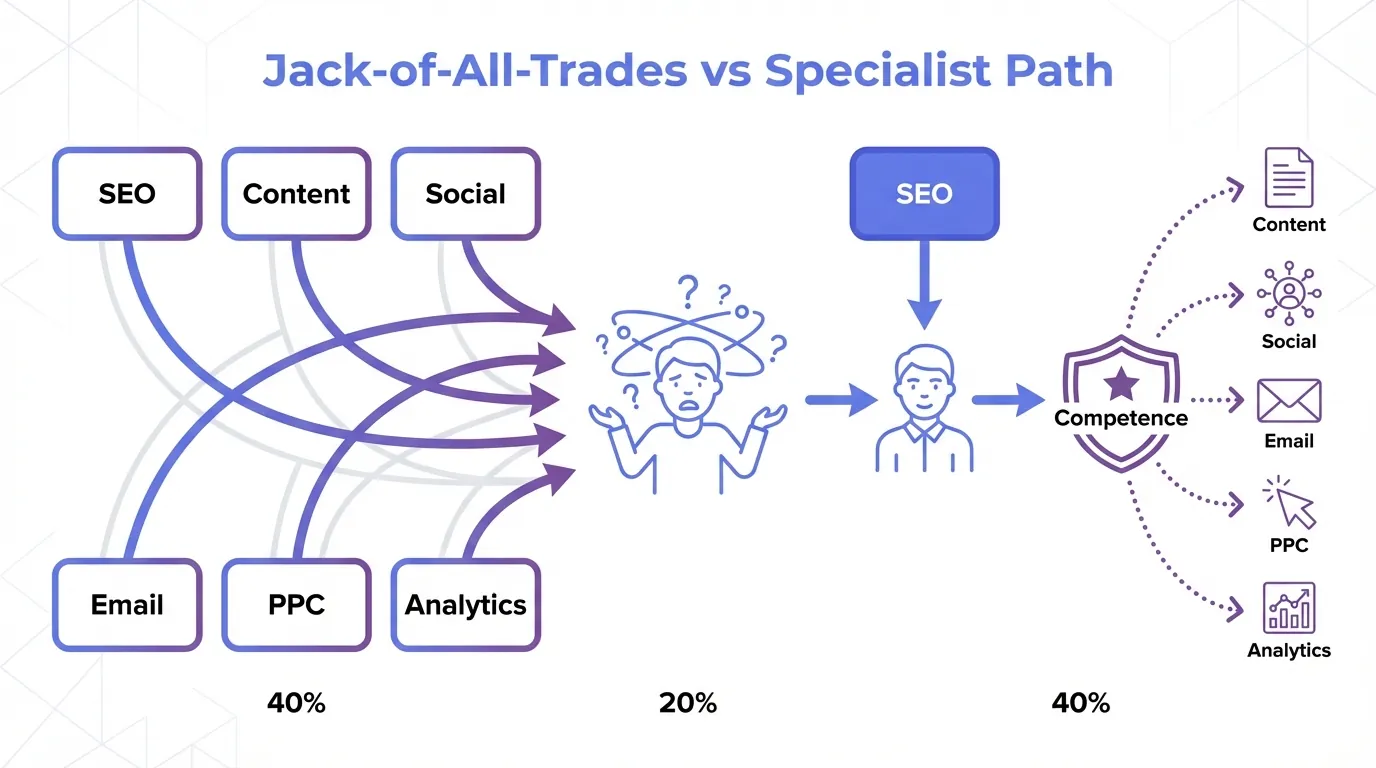
Most beginners try learning everything simultaneously. They take courses on SEO while dabbling in Facebook ads while trying to master email automation. Three months later, they've mastered nothing. They're frustrated and broke.
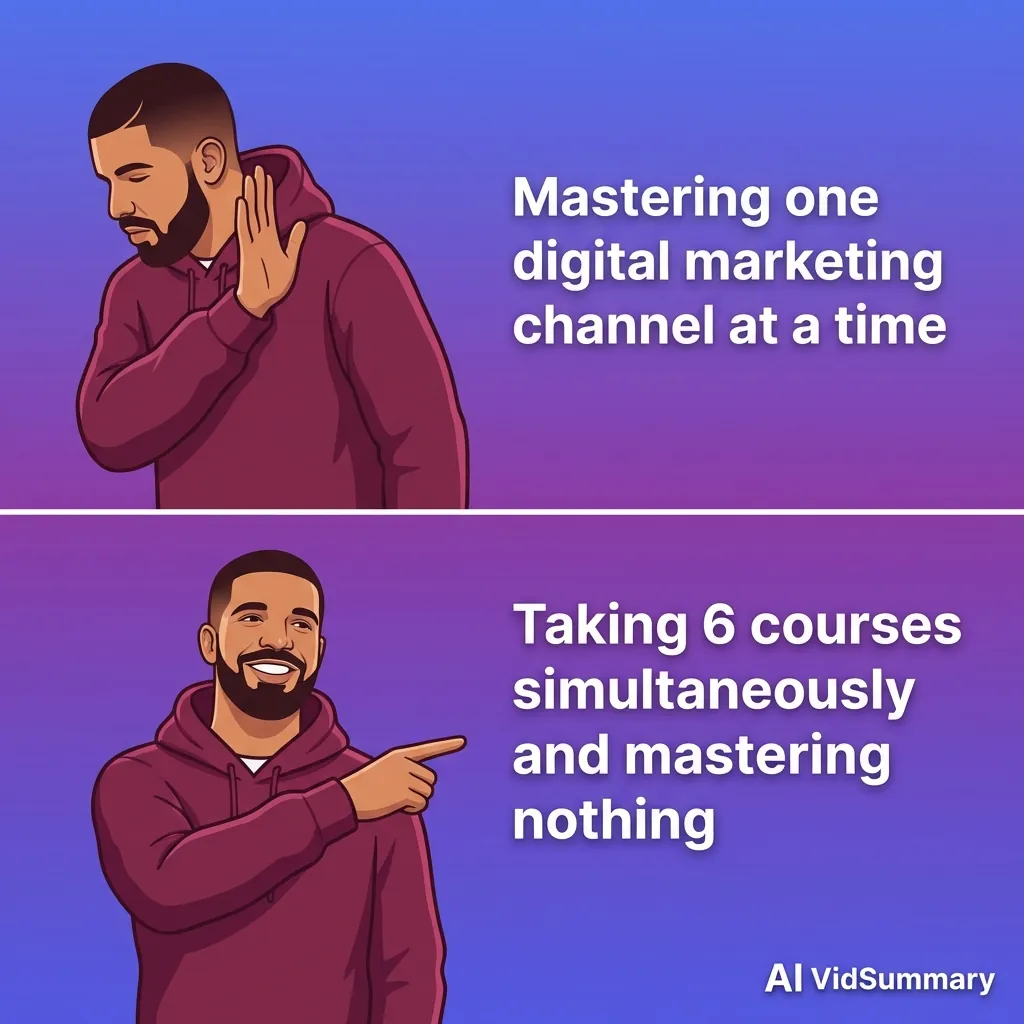
Stop spreading yourself thin.
As one Reddit marketer put it: "It's like saying you want to learn sports. You have to pick one or two or three." You can't become a professional athlete in every sport. Same applies here.
The second killer? Platforms change faster than you learn. Last year's Facebook ad tactics became obsolete in March 2026. AI Search optimization didn't exist three years ago. Now it's essential.
The Jack-of-All-Trades Trap That Kills Progress
Digital marketing has six major disciplines. Each requires months of focused practice to develop competence. Spreading your attention across all of them guarantees surface-level knowledge that employers won't pay for.
I've seen this pattern repeatedly. Someone takes a Google Ads course, then jumps to SEO, then tries content marketing. Six months later, they can't execute any single channel effectively.
The solution? Pick one channel to master first. Build deep expertise that makes you valuable. Then expand your horizontal knowledge.
Why Digital Marketing Evolves Faster Than You Can Learn
Algorithms change quarterly. New platforms emerge annually. Consumer behavior shifts with cultural trends and technological advances.
What worked in 2025 might fail in 2026. Instagram prioritizes Reels differently now. Google's AI overviews changed how people search. TikTok Shop transformed social commerce overnight.
This isn't a one-and-done learning journey. You're signing up for continuous education. The marketers who thrive embrace this reality instead of fighting it.
What You Can Actually Learn in 3 Months
Being straight with you about three-month expectations: you'll learn campaign planning, grasp platform mechanics, and interpret basic analytics. Senior strategist-level thinking or advanced conversion optimization? Not happening.
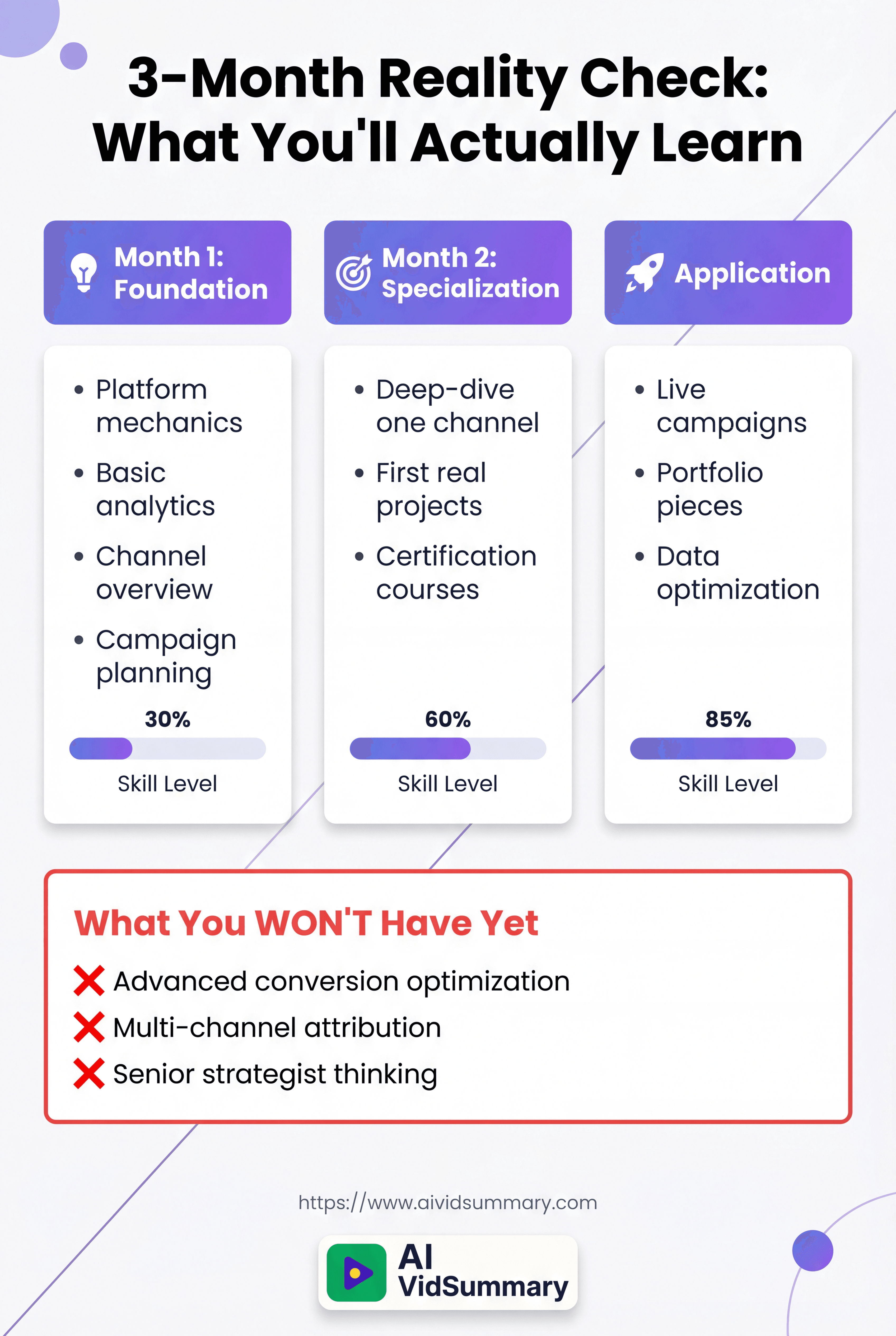
Still valuable though.
Noble Desktop's comprehensive Digital Marketing Certificate requires 120 hours of hands-on instruction. Their Social Media Marketing Certificate takes 72 hours. Professional-level training doesn't compress into 90 days of casual learning.
But functional? Absolutely. Ready to start working.
Your realistic structured learning roadmap for what's achievable.
The Basics You Will Master
Core pillars become familiar territory:
- SEO fundamentals
- Content marketing principles
- Social media platform mechanics
- Email campaign basics
- PPC advertising concepts
You'll grasp how these channels work together.
Campaign planning with clear objectives becomes second nature. Setting goals, identifying target audiences, choosing appropriate channels, and creating basic content calendars. These planning skills translate directly to entry-level positions.
Google Analytics becomes readable instead of overwhelming. You'll interpret traffic sources, understand bounce rates, track conversions, and identify which channels drive results. Data literacy separates marketers from order-takers.
The Expert-Level Skills You Will Not Have Yet
Advanced conversion optimization requires years of testing. Multivariate testing, psychological triggers, or sophisticated funnel optimization won't happen in 90 days.
Complex multi-channel attribution remains confusing. Understanding how touchpoints interact across the customer journey takes extensive campaign experience and data analysis practice.
Senior strategist thinking develops slowly. Connecting business objectives to marketing tactics, predicting market shifts, and developing innovative approaches require pattern recognition from hundreds of campaigns.
The T-Shaped Marketer Strategy That Actually Works
Rand Fishkin popularized the T-shaped marketer concept. The horizontal bar represents broad understanding across all channels. The vertical bar represents deep expertise in one or two specializations.
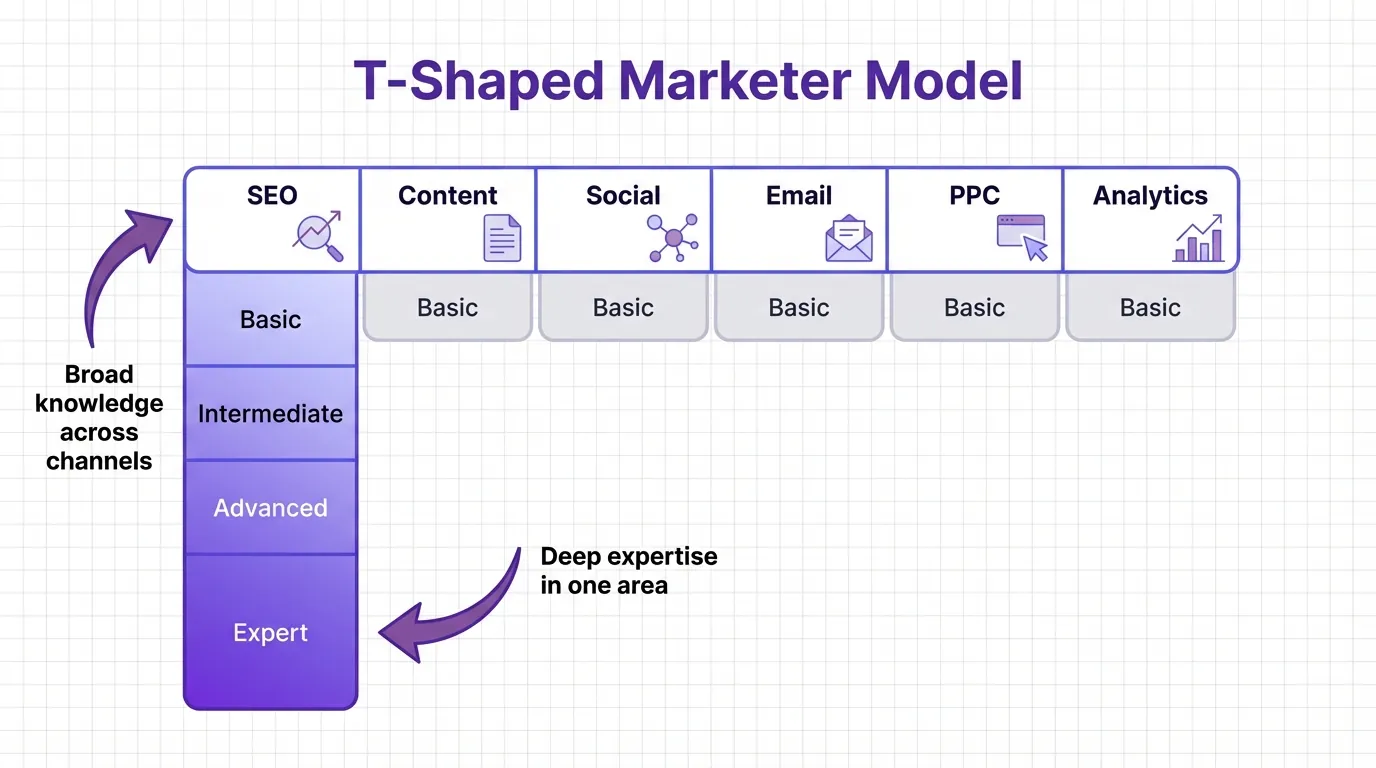
This approach makes you valuable immediately. Employers want specialists who grasp the bigger picture. You can execute brilliantly in your area while collaborating intelligently with other specialists. Generalists who do everything poorly get passed over for promotions and higher-paying opportunities.
Specialization beats generalization every time. Always.
You need both depth and breadth. Depth makes you hireable. Breadth makes you strategic.
Focus on building your vertical first. Then expand horizontally once you've proven competence in one channel.
What Makes a T-Shaped Marketer Valuable
Broad understanding prevents siloed thinking. You know how SEO impacts content marketing. You understand why email complements social media. You recognize when paid advertising accelerates organic growth.
Deep expertise in one or two areas makes you indispensable. Companies hire specialists, not dabblers. When you can execute SEO campaigns that actually move rankings or run Facebook ads with proven ROI, you become valuable.
Rand Fishkin built Moz using this approach. Broad marketing knowledge with deep SEO expertise created a billion-dollar company.
How to Choose Your Specialization in Month 1
Test different channels during your first 30 days. Try writing content, running small ad campaigns, optimizing a webpage, creating social posts. Notice what energizes versus drains you.
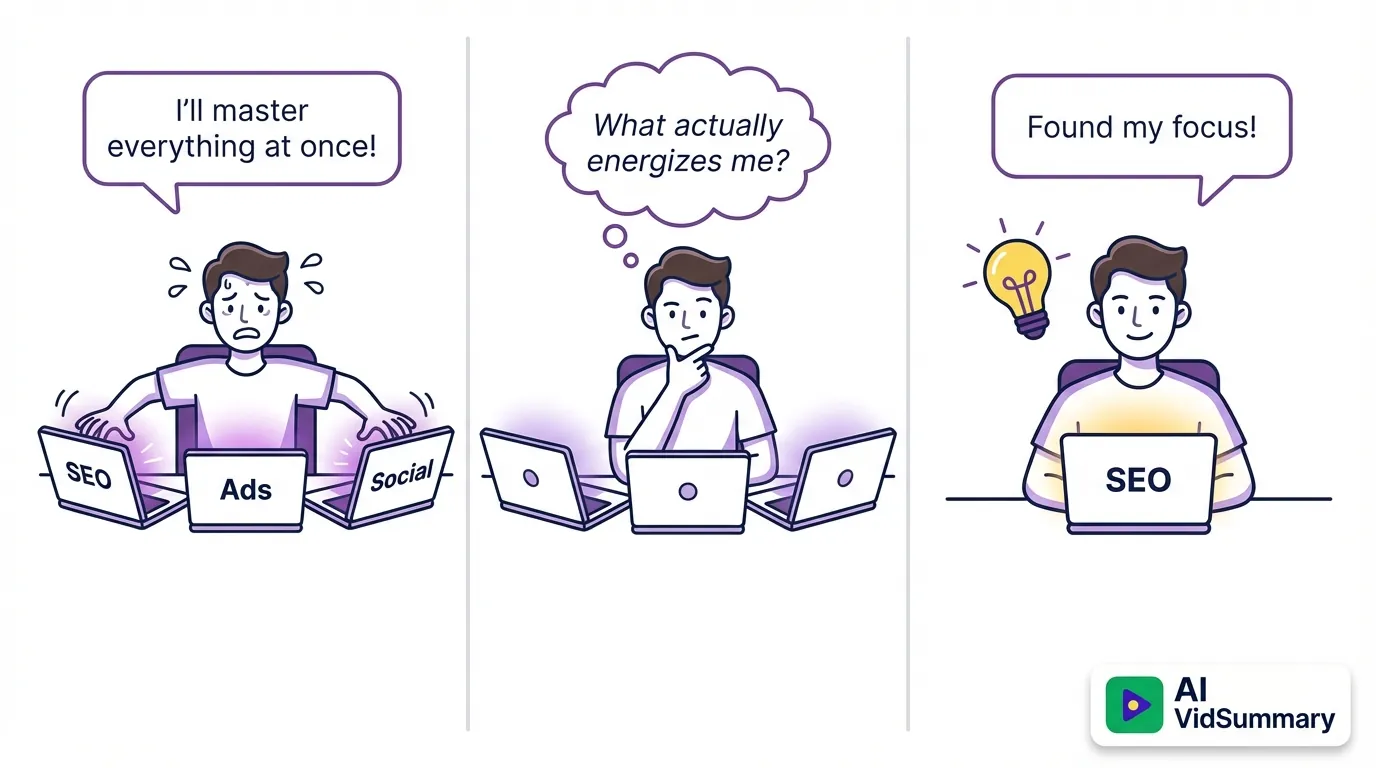
Choose based on intersection of enjoyment and market demand. SEO specialists command high salaries. Content marketers stay busy with freelance work. Paid advertising experts get agency offers quickly.
As marketingshivanshu advises: "Pick one area and master it. Then repeat." This sequential approach builds expertise without overwhelm.
Building Your Horizontal Knowledge Base
Survey courses covering all major channels exist. Take broad overviews without going deep yet. Understand how each channel functions and when to deploy it.
Recognize how channels work together synergistically. SEO feeds content marketing. Content marketing fuels social media. Social media warms audiences for email. Email nurtures leads for sales.
When consuming video tutorials and courses, use AI VidSummary to extract key points quickly and create searchable study notes from lengthy marketing videos. You'll cover more ground without watching 40-hour video libraries at normal speed.
Your 90-Day Learning Roadmap
Week-by-week structure prevents drift. You need concrete milestones, not vague intentions.
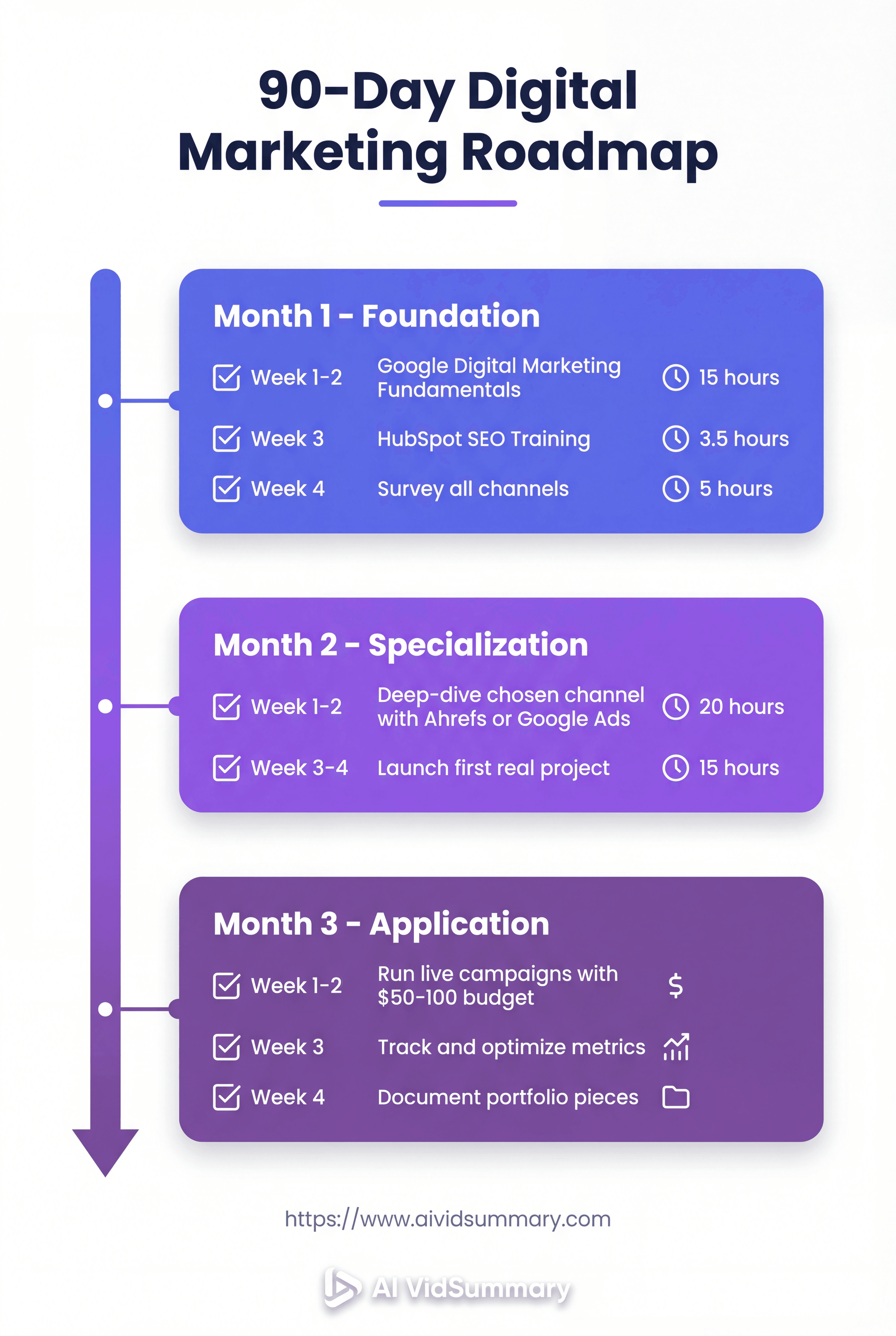
This roadmap emphasizes hands-on practice over passive consumption. You'll build real campaigns, analyze actual data, and create portfolio pieces. Theory without application creates zero marketable skills.
- Month one explores everything.
- Month two specializes deeply.
- Month three applies practically.
Month two specializes deeply. Month three applies practically. Each phase builds on previous foundations while maintaining forward momentum.
Month 1 Foundation Phase
Week one and two focus on Google's free Digital Marketing fundamentals course. Complete all modules, take notes, and finish exercises. This establishes baseline vocabulary and concepts.
Week three introduces SEO through HubSpot's SEO Training Course. Eight lessons, five quizzes, approximately 3.5 hours of learning. You'll understand keyword research, on-page optimization, and link building basics.
Week four explores remaining channels broadly. Take introductory courses in social media marketing, email marketing, and PPC advertising. Don't go deep. Just understand what each channel does and when to use it.
Check this digital marketer career guide for additional context on skill progression.
Month 2 Specialization Phase
Choose your T-shaped vertical now. Pick one or two channels that excited you during month one exploration. Commit to going deep.
If choosing SEO, complete Ahrefs' SEO Course for Beginners. Fourteen lessons, two hours, covering technical SEO, content optimization, and link building strategies. If choosing paid advertising, dive into Google Ads Skillshop certification.
Launch your first real project or volunteer work. Start a blog, offer free services to a local nonprofit, or run small test campaigns. Theory becomes skill only through application.
Month 3 Application Phase
Run actual campaigns with small budgets. Fifty to one hundred dollars provides enough data for learning without financial risk. Test different ad copy, targeting options, and landing pages.
Track metrics obsessively and optimize based on data. Which headlines get clicks? What targeting delivers conversions? Where does money get wasted? This analytical thinking separates marketers from hobbyists.
Document everything for portfolio pieces. Screenshot results, write case studies, explain your thinking. These artifacts become your job application materials or freelance proposals.
The Best Free Courses That Actually Teach Digital Marketing
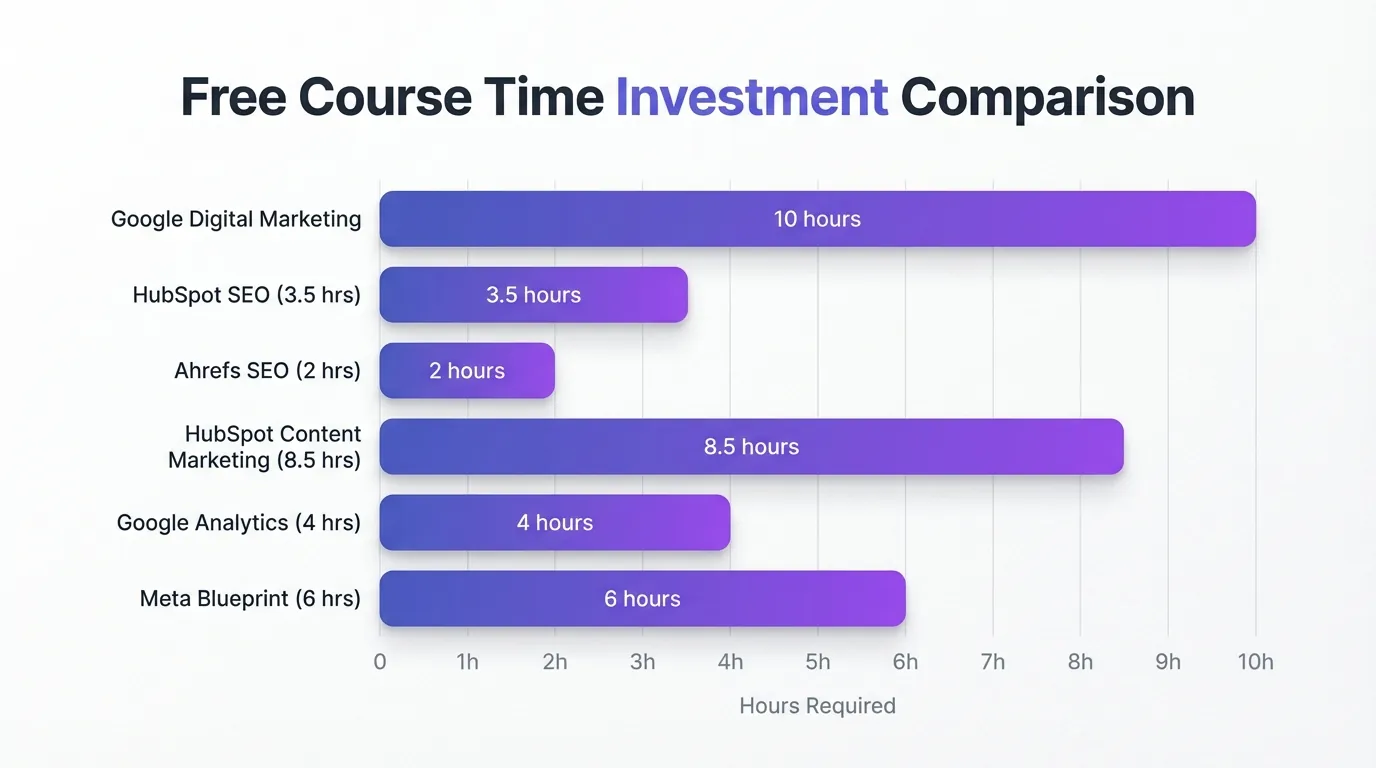
More than twenty free courses exist from authoritative platforms. Paid programs aren't necessary to learn fundamentals. Save money for testing budgets instead.
Quality matters more than quantity.
Google Digital Marketing courses provide industry-standard foundational knowledge. Their certifications carry weight with employers because Google literally invented several digital marketing channels. Complete their fundamentals course first, then specialize based on your chosen vertical.
Meta Blueprint, LinkedIn Learning, and HubSpot Academy offer platform-specific training. These teach you the mechanics of each channel from the companies that built them.
Focus on courses with certifications. Employers value proof of completion.
Check Coursera marketing certifications for university-backed programs if you want academic rigor alongside practical skills.
SEO and Search Marketing Courses
HubSpot SEO Training delivers eight lessons and five quizzes across 3.5 hours. You'll learn keyword research fundamentals, on-page optimization techniques, and link building strategies. Certification proves completion to potential employers.
Ahrefs SEO Course for Beginners provides fourteen lessons in two hours. Covers technical SEO, content optimization, and competitive analysis using Ahrefs' professional tools. Both courses complement each other beautifully.
Content and Social Media Marketing Courses
HubSpot Content Marketing Certification spans fourteen lessons and eleven quizzes across 8.5 hours. You'll master content strategy, creation workflows, distribution tactics, and performance measurement. This certification appears frequently on job requirements.
Acadium Influencer Marketing Course offers six beginner-friendly lessons. Covers influencer identification, partnership negotiation, campaign management, and ROI measurement. Short but comprehensive.
Meta Blueprint and LinkedIn Learning provide platform-specific social media training. Learn advertising mechanics, audience targeting, creative best practices, and analytics interpretation directly from the platforms.
Analytics and Paid Advertising Courses
Google Analytics Academy offers free certification courses. Learn to track website traffic, understand user behavior, set up conversion goals, and create custom reports. Essential skill for every marketer.
Google Ads Skillshop provides comprehensive paid advertising training. Search ads, display ads, video ads, shopping ads. Every Google advertising format gets covered.
Facebook Blueprint covers paid social advertising mechanics. Targeting options, creative formats, bidding strategies, and campaign optimization for Facebook and Instagram ads.
Why Hands-On Practice Beats Theory Every Single Time
Watching courses without application creates zero retention.
I've met dozens of people who completed ten courses but couldn't execute one campaign. They confused consumption with learning. Theory feels productive while accomplishing nothing.
You remember what you do, not what you watch. Running a failed Facebook ad campaign teaches more than five courses on Facebook advertising. Optimizing a blog post that ranks on page three reveals SEO realities no tutorial covers. Sending an email campaign to 100 subscribers shows what actually drives opens and clicks.
When consuming video tutorials and courses, use AI VidSummary to extract key points quickly and create searchable study notes from lengthy marketing videos.
Application transforms information into skill. Start building immediately.
Waiting until you know everything guarantees you'll never start. Knowledge without execution equals zero market value.
Start Your Own Digital Property Immediately
Launch a blog, YouTube channel, or social media account today. Personal projects provide consequence-free learning laboratories where mistakes cost nothing except pride.
You'll learn more from one failed campaign than ten courses. Real data reveals what actually works versus what sounds good in theory.
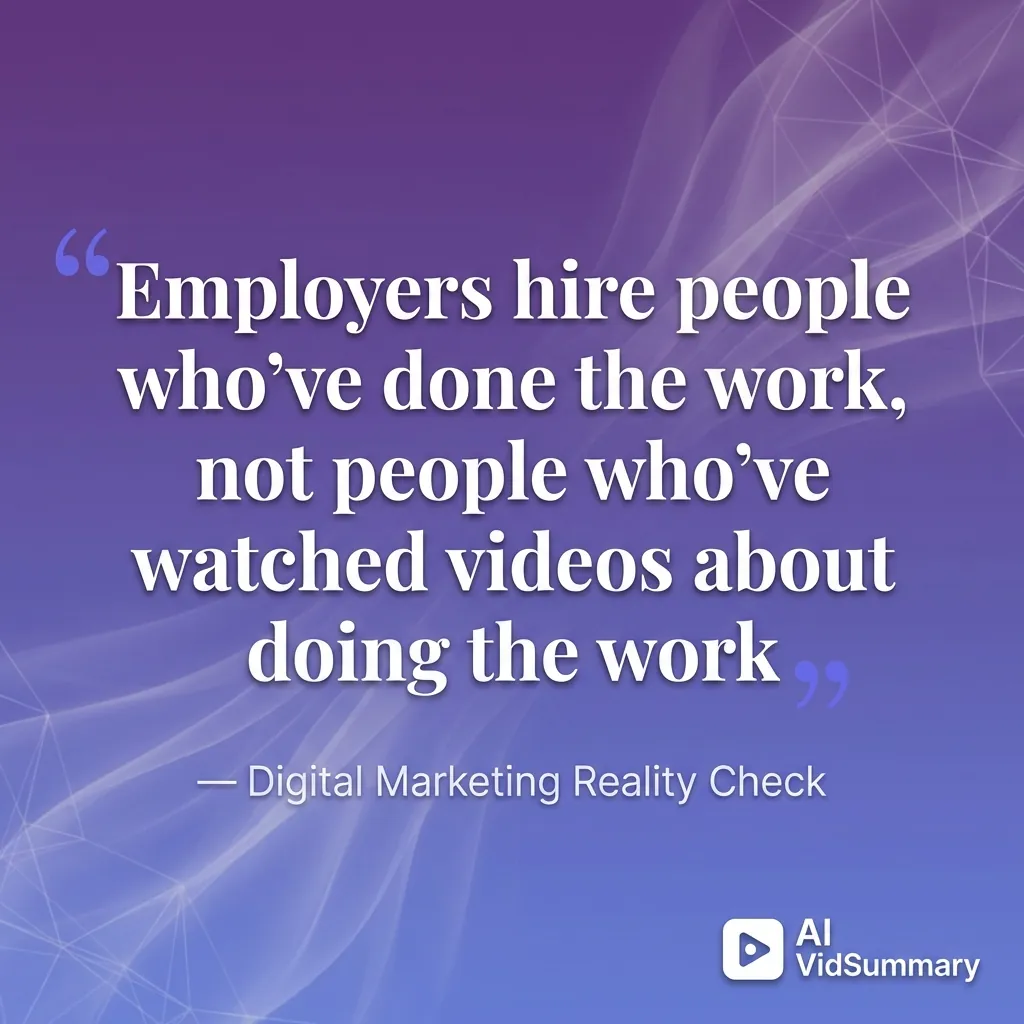
Theory without application equals zero skill. Employers hire people who've done the work, not people who've watched videos about doing the work.
Volunteer for Local Businesses or Nonprofits
Real clients create real constraints and expectations. Nonprofits need digital marketing help desperately. Small businesses operate on tight budgets requiring efficient strategies.
Offer free services in exchange for portfolio work and testimonials. You gain experience, they gain results, everyone wins. These projects demonstrate capability to future employers or paying clients.
You'll learn to communicate strategy to non-marketers. Translating technical concepts into business language becomes essential as you advance your career.
How to Learn from Your Experiments
Document what you try and what happens systematically. Create spreadsheets tracking campaign variables, results, and insights. This data becomes your personal knowledge base.
Analyze data to understand why results occurred. Don't just celebrate wins or dismiss losses. Dig into metrics to identify causal factors driving performance.
Extract key points from lengthy tutorials efficiently using AI tools. You'll consume more educational content without sacrificing all your time to passive watching.
The New Skills You Need for 2026
Digital marketing evolved significantly in the past year. AI Search optimization, automation platforms, and data privacy regulations changed how we work.
Staying current requires continuous learning beyond foundational courses. The marketers thriving in 2026 adapted to AI-powered search, mastered automation tools, and navigated privacy-first marketing constraints.
Those stuck in 2024 tactics struggle to deliver results.
Ignore emerging trends at your career's peril.
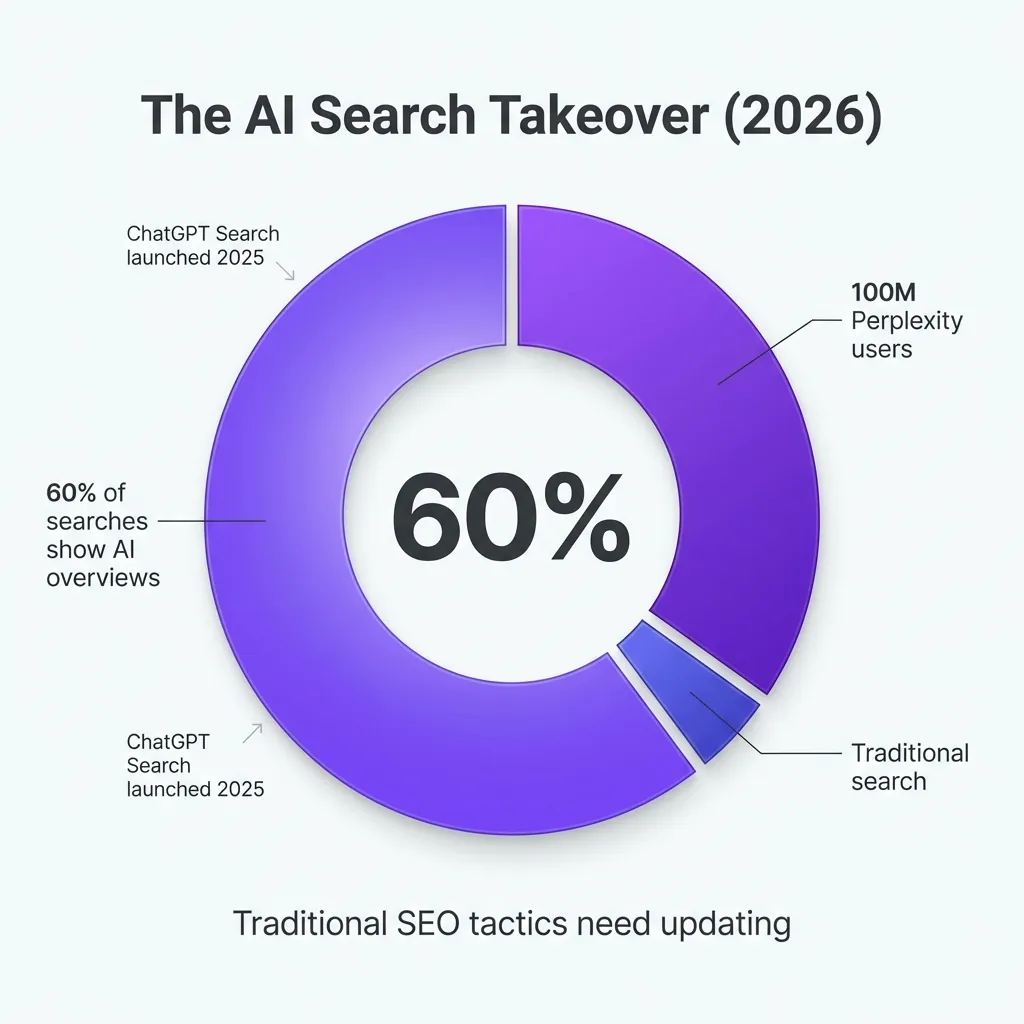
Charlie Marchant from Exposure Ninja emphasizes AI Search optimization as the biggest shift since mobile-first indexing. Google's AI overviews, ChatGPT search integration, and Perplexity's rise fundamentally changed how people find information online.
Traditional SEO tactics need updating for AI-powered discovery. SurferSEO's AI Search Optimisation Masterclass covers this shift across seven modules.
AI Search Optimization Is No Longer Optional
Traditional SEO focused on ranking web pages. AI Search optimization targets getting cited in AI-generated summaries and overviews. Different game entirely.
SurferSEO's AI Search Optimisation Masterclass provides seven modules covering this new landscape. You'll learn to optimize for AI citations, structure content for AI comprehension, and track visibility in AI-powered search results.
Google's AI overviews appear in 60% of searches now. ChatGPT search launched in late 2025. Perplexity gained 100 million users. Optimizing for AI summaries became mandatory, not optional.
Marketing Automation and AI Tools
Email automation platforms like Mailchimp and ActiveCampaign enable sophisticated nurture sequences. Triggered emails based on user behavior, segmentation based on engagement, and personalization at scale. Manual email campaigns can't compete.
AI writing assistants accelerate content creation. Tools like Claude, ChatGPT, and Jasper help draft blog posts, ad copy, and social media content. They don't replace human creativity but amplify output significantly.
Social media scheduling and analytics tools simplify management. Buffer, Hootsuite, and Sprout Social let you plan content weeks ahead and track performance across platforms from one dashboard.
How to Know When You Are Ready to Get Hired
Portfolio requirements matter more than certifications. Employers want proof you can execute, not proof you watched courses.
Three to five campaign examples with documented results demonstrate competence.
Case studies showing your thinking process, execution steps, challenges faced, and results achieved separate you from certificate collectors. Include metrics: traffic increases, conversion rate improvements, cost per acquisition reductions. Numbers prove capability.
At least one paid advertising example shows budget management skills. Even small campaigns ($50-100 spend) demonstrate you understand bidding, targeting, and optimization mechanics.
Show it.
Content marketing results with traffic data validate your ability to create valuable content and promote it effectively. Screenshots of Google Analytics showing traffic growth carry weight.
The Portfolio Pieces You Must Have
Three to five campaigns with clear before-and-after metrics establish baseline competence. Show starting performance, your interventions, and resulting improvements with specific numbers.
At least one paid advertising example demonstrates budget management. Include spend amounts, impressions, clicks, conversions, and cost per result. Employers need proof you won't waste their ad budgets.
Content marketing results require traffic data. Show organic search growth, social referral traffic, or email subscriber increases. Screenshots from Google Analytics add credibility.
Skills Employers Actually Test For
Google Analytics interpretation exercises appear in most interviews. You'll receive sample data and must identify insights, problems, and opportunities. Practice reading reports before interviewing.
Campaign planning and budgeting scenarios test strategic thinking. Given business objectives and budget constraints, you'll outline channel selection, budget allocation, and success metrics. This reveals whether you understand marketing fundamentals.
Content strategy development tests assess your ability to plan coherent campaigns. You'll create content calendars, identify topics, plan distribution, and project results. Employers want strategists, not just executors.
Conclusion
Ninety days makes you functional, not expert. You'll grasp fundamentals, run basic campaigns, and read analytics data. Senior-level thinking needs years of pattern recognition from hundreds of campaigns.
That's enough to begin working.
Quit planning perfectly and begin with one free course today. Google's Digital Marketing fundamentals or HubSpot's SEO Training. Action wins over preparation every time.
Great marketers never stop learning. Digital marketing shifts quarterly, demanding continuous skill development. Accept this reality instead of resisting it.
Share this

About AI Vid Summary Team
We're a passionate team dedicated to transforming how people learn from video content. At AI Vid Summary, we combine cutting-edge AI technology with user-friendly design to help students, professionals, and lifelong learners extract maximum value from YouTube videos and online courses.
Try AI Vid Summary


Loading comments...