
The Career Change Learning Path That Actually Works in 2026

Table of Contents
Introduction
You're considering a career shift. That sinking feeling every Monday login? It's telling you something.
I've guided hundreds of professionals trapped in this same position. Some burned ten years in finance feeling hollow. Others reached six-figure salaries but still battle the monotony.
This isn't about failing.
Why Smart People Struggle Most with Career Change
The Golden Handcuffs Phenomenon
High achievers face a specific trap. Success makes leaving feel impossible. The salary, the title, the respect. They all become chains.
Money creates dependency fast.
I've seen tech managers leading 100+ people who feel trapped. They make great money but describe it as golden handcuffs. The corporate politics drain them. Red tape frustrates them. Boredom sets in despite the paycheck.
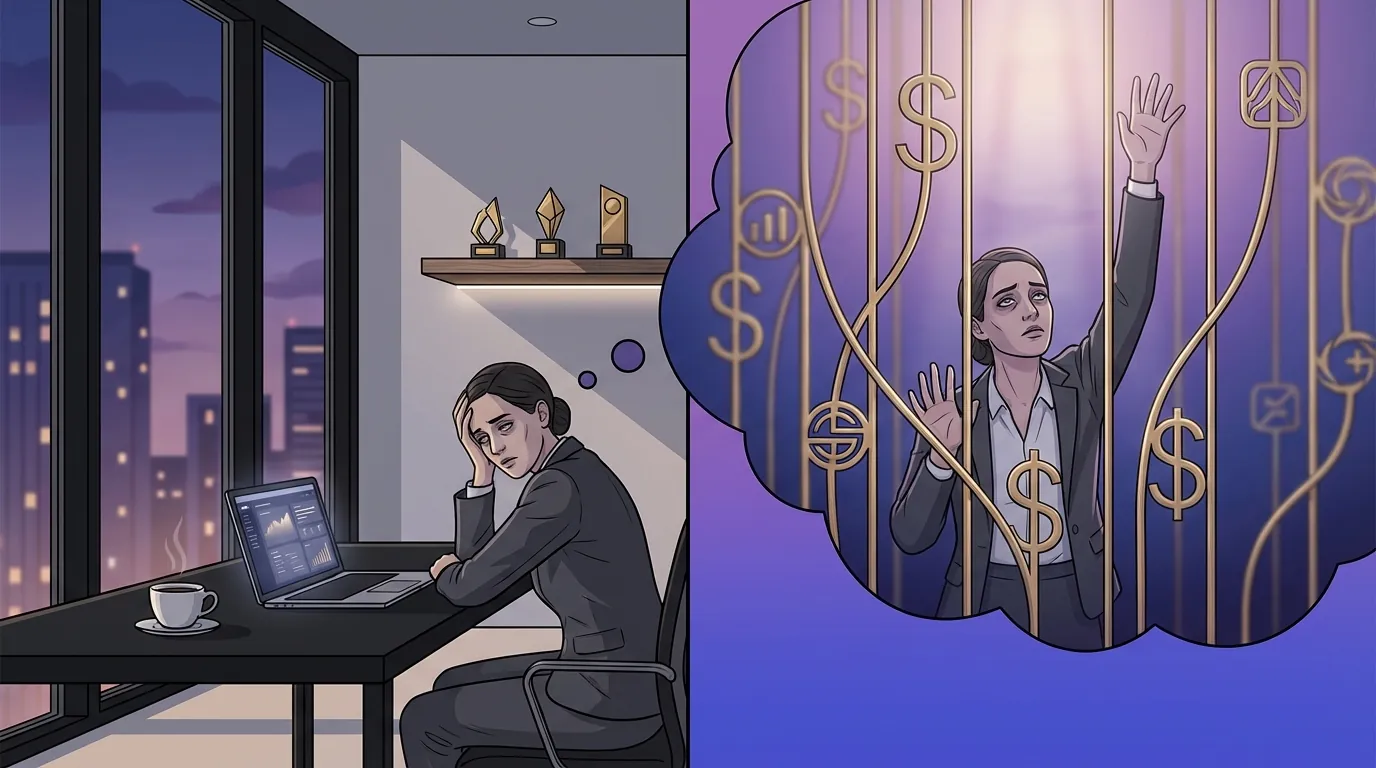
Social status becomes your identity over time. Walking away from guaranteed success feels foolish. You wonder who abandons what others desperately want.
When Analysis Becomes Paralysis
Trying to figure everything out keeps you stuck. You research endlessly without taking action. Every option feels inadequate when you overthink it.
Action precedes clarity, not the other way around. Careershifters founder Richard puts it simply: you can't figure it out by figuring it out. Join their online workshop to explore with others facing the same challenges.
The First Step Nobody Talks About
Company vs Industry vs Career
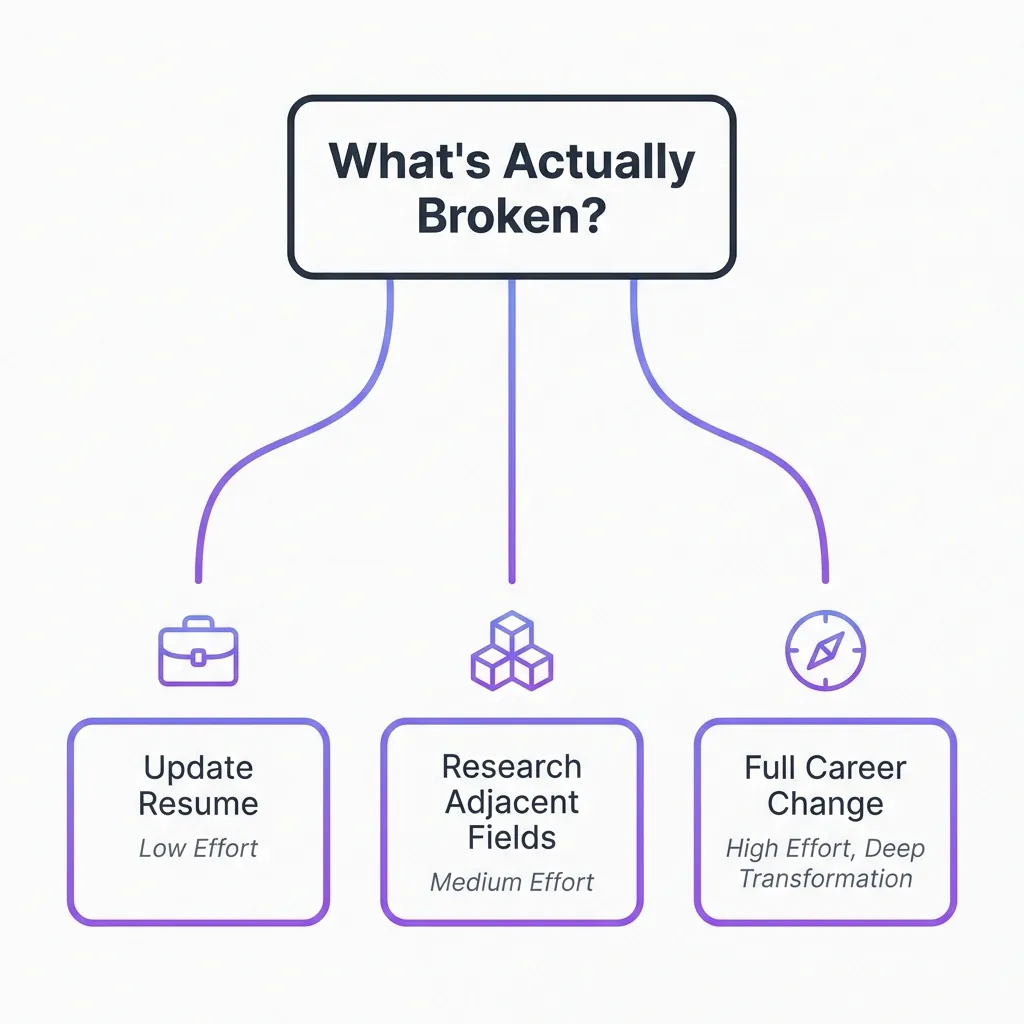
Start by diagnosing what's actually broken. Sometimes you just hate your boss or the company culture. A different work environment could fix everything.
Switching industries means you get to keep your existing skills.
Full career changes demand the most effort. But they also deliver the deepest transformation.
Ask yourself Linda Spencer's question from Harvard Extension School: what makes you pop out of bed Monday morning?
- Company issues? Update your resume.
- Industry problems? Research adjacent fields.
- Career misalignment? Keep reading.
Identifying Your Transferable Skills
You have more to work with than you realize. Project management works everywhere. Communication skills transfer across any field.
Critical thinking applies universally.
Most career development experts agree on this. You're not starting from zero. Build on existing strengths instead.
Building Your Career Change Learning Roadmap
Setting Specific, Measurable Goals
Vague aspirations don't work. You need concrete benchmarks you can actually track. Finish a specific certification by June.
Develop three portfolio pieces that showcase new skills. Construct a project that addresses real problems.
Monitor your progress with clear weekly checkpoints. Create timelines that challenge you without breaking you.
Measurable goals maintain momentum.
A structured career planning framework stops you from wasting effort. The benefits of career path planning include faster progress and clearer direction. You'll know exactly what to learn next. You'll recognize when you're actually advancing.
Formal Education vs Hands-On Experience
Mix structured learning with real-world application. Merit America programs reveal realistic time commitments. IT Support takes 20 hours weekly for 14 weeks. Data Analytics requires 25 hours weekly for 19 weeks.
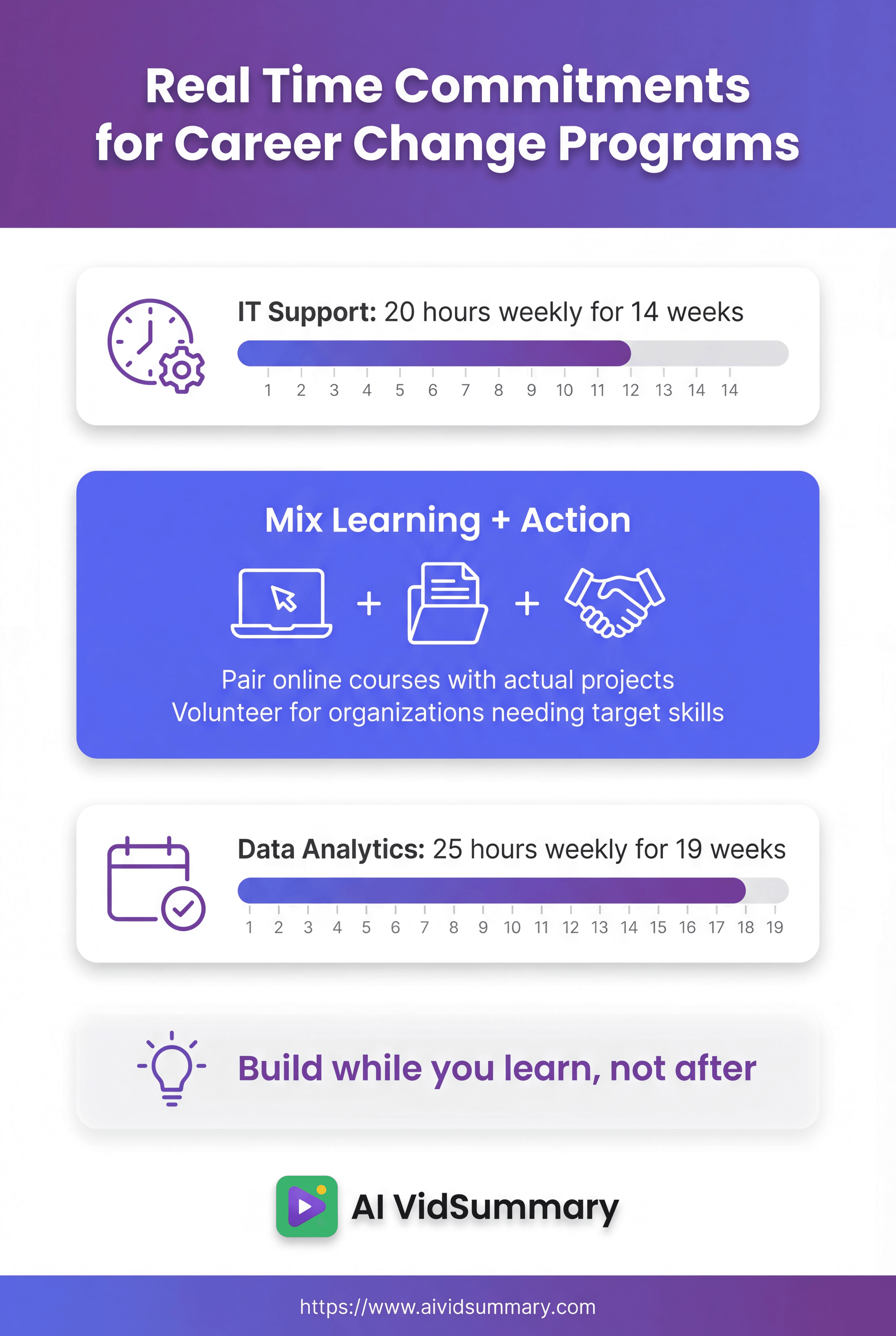
- Pair online courses with actual projects
- Volunteer for organizations needing your target skills
- Contribute to open-source projects in your field
- Build while you learn, not after
Choosing the Right Learning Resources
Start with industry-recognized certifications. Ask people already doing the work you want. They'll tell you what actually matters.
Platforms like Coursera offer structured paths. When time is tight, tools like AI VidSummary help you extract key information from tutorial videos and webinars quickly. Focus on resources your target industry actually values.
Don't try to learn everything at once.
The Networking Strategy That Actually Works
Why Informational Interviews Beat Job Applications
Traditional job applications rarely work for career changers. You're competing against people with direct experience.
Informal conversations outperform formal applications. Scheduling them takes less effort than landing real interviews. You create authentic relationships rather than firing off resumes into the void.
You discover what the work actually entails beyond polished job descriptions. People keep you in mind when openings emerge. Looking for people instead of jobs changes everything.
Opportunities attach themselves to people, not postings.
Check success stories to see this principle in action. Real career changers found opportunities through relationships. They built networks before needing jobs.
Most never applied to traditional job postings.
Becoming a Mini-Expert in Your Target Field
- Attend conferences and local meetups in your field
- Read the trade publications everyone else reads
- Engage in industry discussions on LinkedIn
- Talk to people already doing the work
- Ask specific questions about their daily reality
- Use career exploration resources to research thoroughly
Build credibility before you have the title.
Taking Action Without Having It All Figured Out
More planning won't bring you clarity.
- Schedule one informational interview this week
- Finish one small project in your target field
- Act it out rather than researching forever
The Power of Micro-Actions
- Shadow someone for a day
- Sign up for a weekend workshop
- Create something small in your target area
Action shows you what planning can't. You'll learn what you actually enjoy versus what just sounds appealing.
Exploring Before Committing
Freelance in your target field while staying at your job. Grab side projects that develop relevant skills. When time runs short, use tools like AI VidSummary's YouTube summarizer to absorb tutorial videos efficiently.
Test viable options before taking financial risks. Guided programs and transition roadmaps give you structure without forcing you to quit.
Building Your Support System
Career change gets exponentially harder when you go it alone. Track down people who've already made similar shifts.
More than 15,000 alumni have transformed their lives through structured programs like Merit America. They started in your exact position. Some transitioned from finance after nine years. Others walked away from corporate roles approaching 50. Their success came from having support throughout the journey.
Isolation destroys motivation faster than anything else.
Finding Mentors Who've Made the Shift
Target people who've completed your exact transition. Request specific feedback on where you stand. Extract lessons from their mistakes and discover their shortcuts.
Joining Career Change Communities
Build connections with others confronting identical obstacles. Exchange resources and job leads. Fight back against the loneliness that defines career transition. Communities like The L&D Academy support more than 35 different career paths.
Accountability separates planning from execution.
Conclusion
Career shifts can happen whenever you decide to make them. Moving forward with messy action will always outperform endless planning.
You gain clarity through experience, not overthinking.
Book one informational interview before the week ends. Begin your career transition learning journey right now by taking just one tiny action.
Share this

About AI Vid Summary Team
We're a passionate team dedicated to transforming how people learn from video content. At AI Vid Summary, we combine cutting-edge AI technology with user-friendly design to help students, professionals, and lifelong learners extract maximum value from YouTube videos and online courses.
Try AI Vid Summary


Loading comments...