How to Stay Accountable for Online Learning When Nobody's Watching in 2026
AI Vid Summary Team
10 min read
Introduction
Ever counted the online classes you've purchased that now just sit untouched?
I'm Piyush Agarwal. Over the last decade, my journey has taken me from being a struggling freelancer making a mere $200 per month to leading Massive Impact, my agency currently generating around $500K a year. I've guided hundreds of students to build accountability systems that actually deliver. Here's the insight: your lack of progress isn't due to a motivation or intelligence gap. It's because online learning accountability requires a fresh strategy compared to traditional classrooms. Without a professor marking you present or peers expecting you, that $500 course registers to your brain like Netflix - something you'll "watch later."
Accountability in virtual learning? Not about determination.
It's about creating a framework that makes attending easier than avoiding. Routines need external nudges, peer pressure, and tracking progress.
By wrapping up this guide, there’s a transformative 7-day accountability challenge awaiting you. Revive those courses, earn those certificates. No fancy apps or expensive coaches needed.
Why Most Online Courses Remain Unfinished
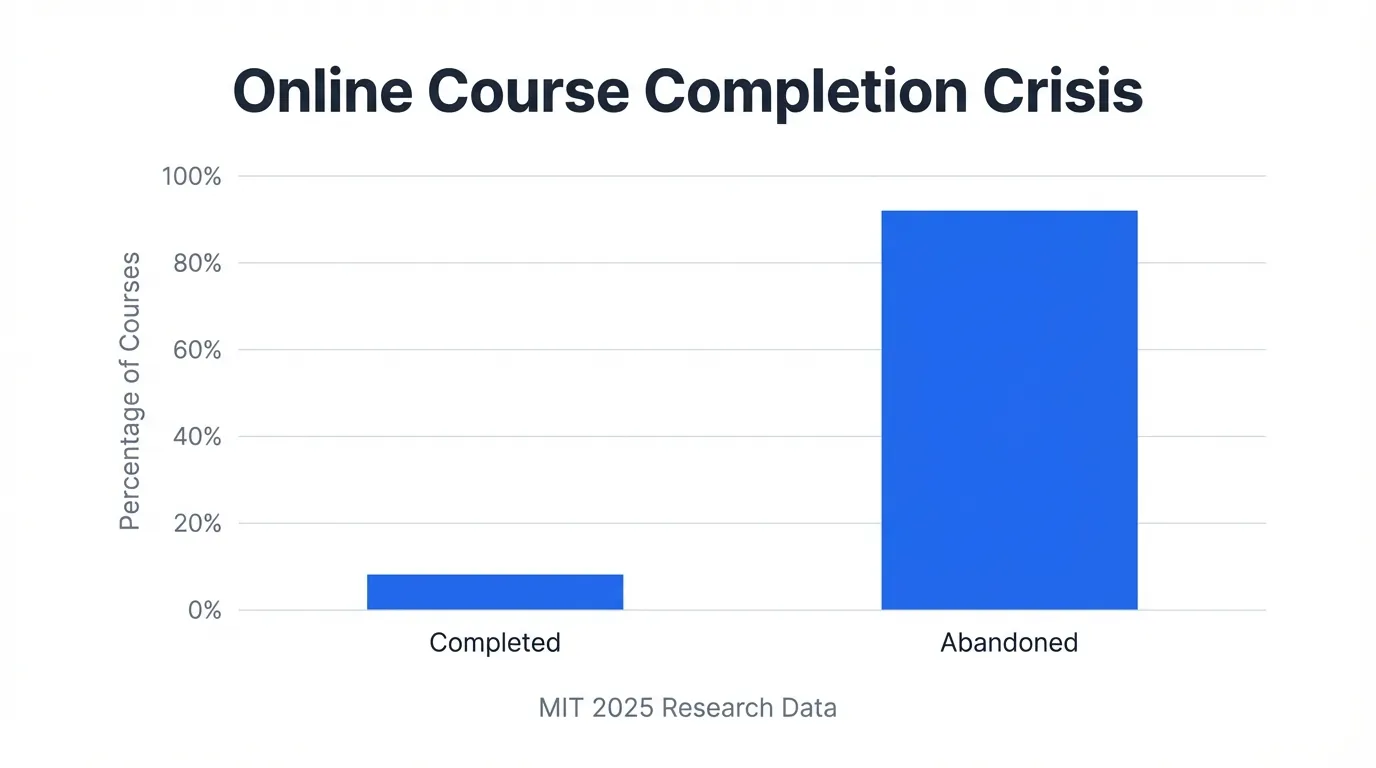
I've seen countless enthusiastic learners purchase courses, only to abandon them by week two. Statistics reflect this trend: MIT's 2025 research highlights that a staggering 92% of online courses remain incomplete. Let's be clear, this isn't due to poor content or unmotivated students.
The primary issue? A total lack of accountability for online learners.
Imagine a typical classroom. You attend because Professor Chen knows you and your classmates expect your presence. There's social pressure at every turn.
Online, though, it's just you, a screen, and endless distractions.
Our brains aren't wired for learning in seclusion. Without external observers, motivation plummets.
The Overlooked Accountability Gap
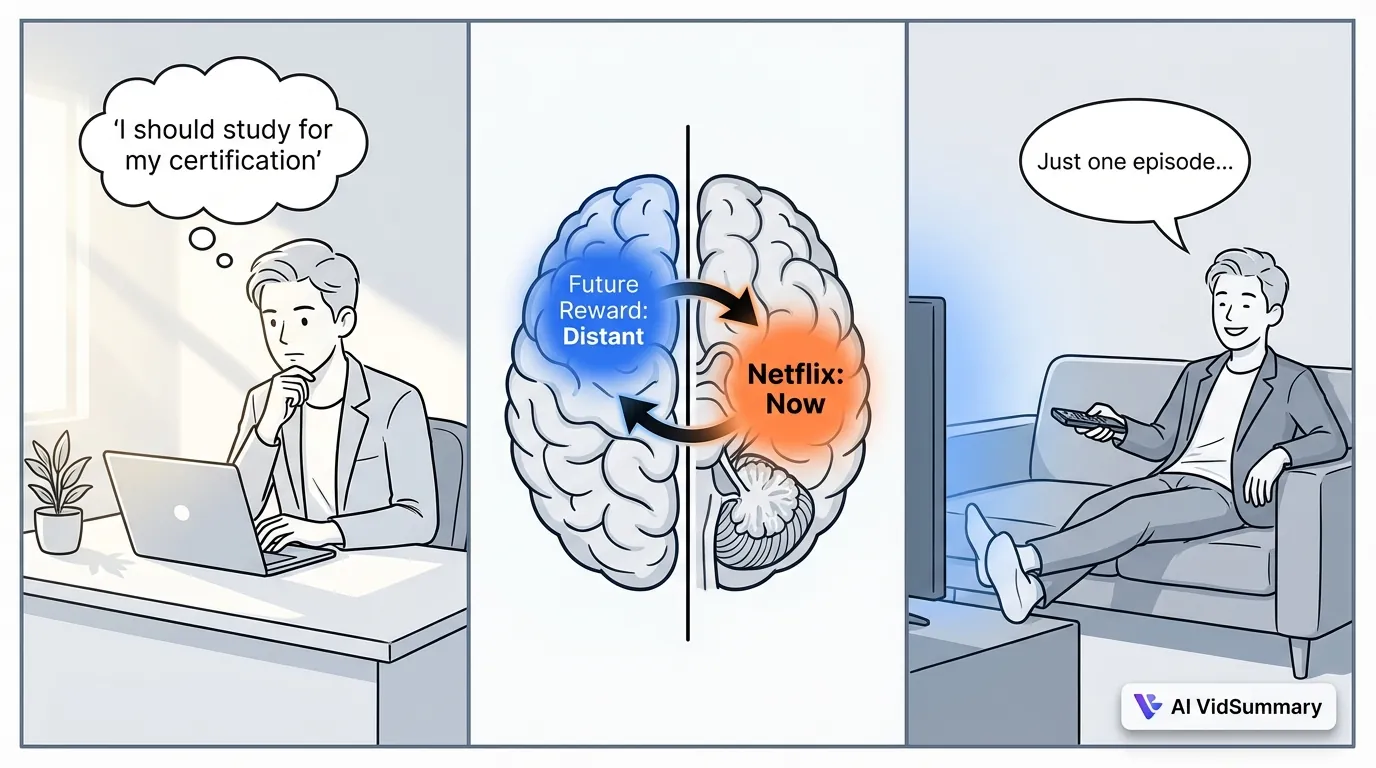
Here's how solitary learning deceives your brain: future outcomes feel distant and indistinct. That certification a few months out? Your prefrontal cortex dismisses it over a Netflix episode that starts now. In-person classes bring immediate peer pressure (everyone's watching), but virtual engagement hinges on self-discipline. Stanford's Behavioral Lab's findings emphasize that humans need outside accountability prompts to remain steady. We're wired for learning in groups, not solitary races. In coaching clients to establish accounting systems for online courses, my first advice is blunt: willpower alone won't suffice.
The Neuroscience of Procrastination: A Comic Strip
A structured approach, beyond motivation, is crucial.
Three Pillars of Responsibility That Truly Deliver
I've seen countless learners begin online courses with genuine enthusiasm, only to disappear after a few weeks. The course materials remain unopened in their browser bookmarks, a digital relic of well-meaning intentions.
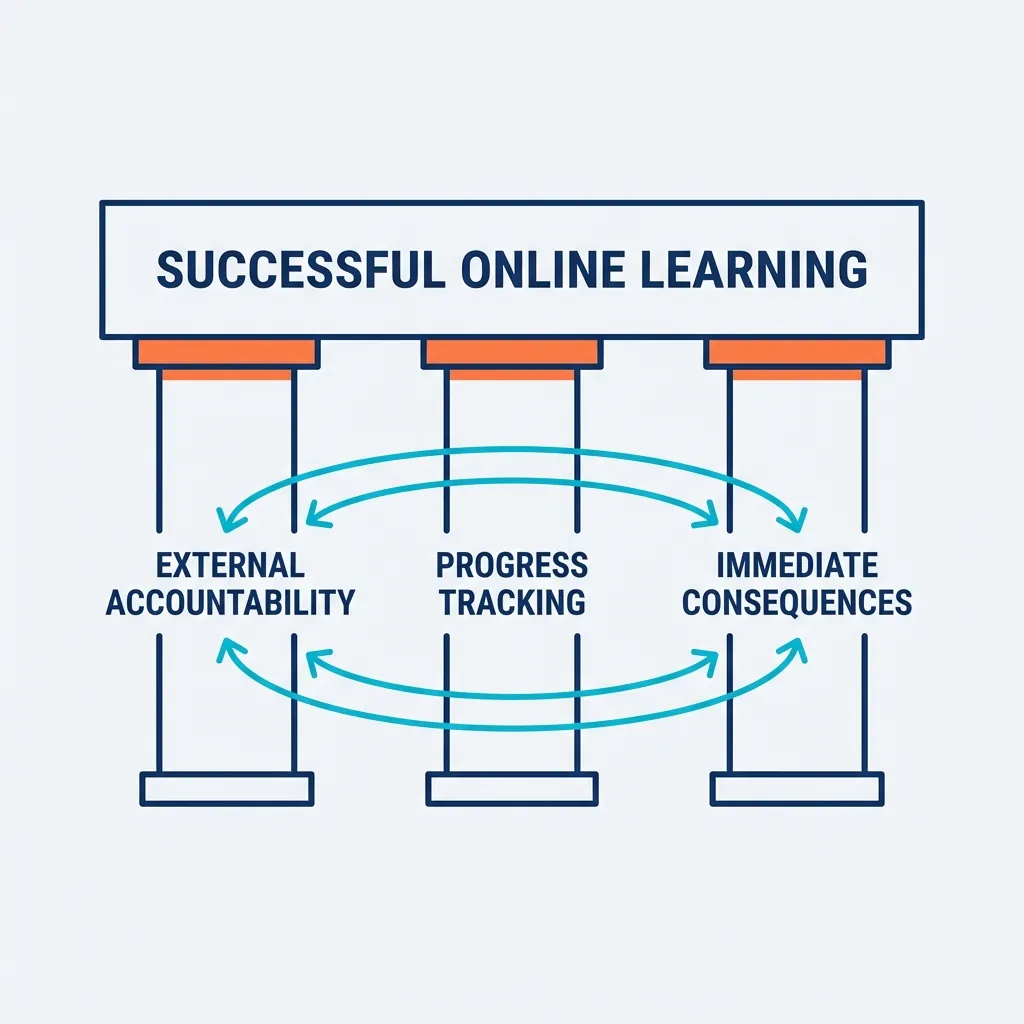
Three Pillars of Successful Online Learning Framework
From my experiences and guiding clients in creating effective learning systems, I've discovered this:
Accountability isn't rooted in sheer willpower or self-discipline. It's about crafting an environment where following through becomes the path of least resistance.
Most online learning accountability systems miss this crucial point.
External Accountability Overpowers Willpower
Our brains are hardwired to seek immediate social approval rather than distant personal achievements. This isn't a flaw in your character - it's behavioral economics at play. When you promise someone, "I'll complete Module 3 by Friday," you create a commitment device activating your fear of appearing unreliable.
During my ADHD-laden college dropout period, I learned this lesson well. Studying solo? Distractions were plentiful. A study group where peers expected me to stay engaged? I could focus for hours. It wasn't my mind that changed - it was the social pressure making the task feel urgent in the moment.
Making the Invisible Work Visible Through Progress Tracking
Online study routines often crumble because learning seems vague until you make it tangible. Your brain can't visualize the knowledge accumulating, making your motivation system think nothing's happening. Visual tracking methods - checking boxes, moving progress markers, logging finished lessons - offer your brain that dopamine boost needed to continue.
Public progress trackers increase completion rates by40% in self-paced courses. Small victories add up.. Completing one module fuels momentum for another. The system thrives because it reveals your hidden effort to your accountability-hungry brain.
Immediate Repercussions That Matter
Repercussions in the distant future don't drive today's actions. Thinking "I'll regret not mastering this skill" doesn't resonate with your brain at present. But "$20 goes to a detested cause if I skip today’s lesson"? That hits immediately.
Effective student accountability systems are those that establish current stakes. They're not about punishment - rather, they create productive consequences that make procrastination uncomfortable enough to disrupt your default habits.
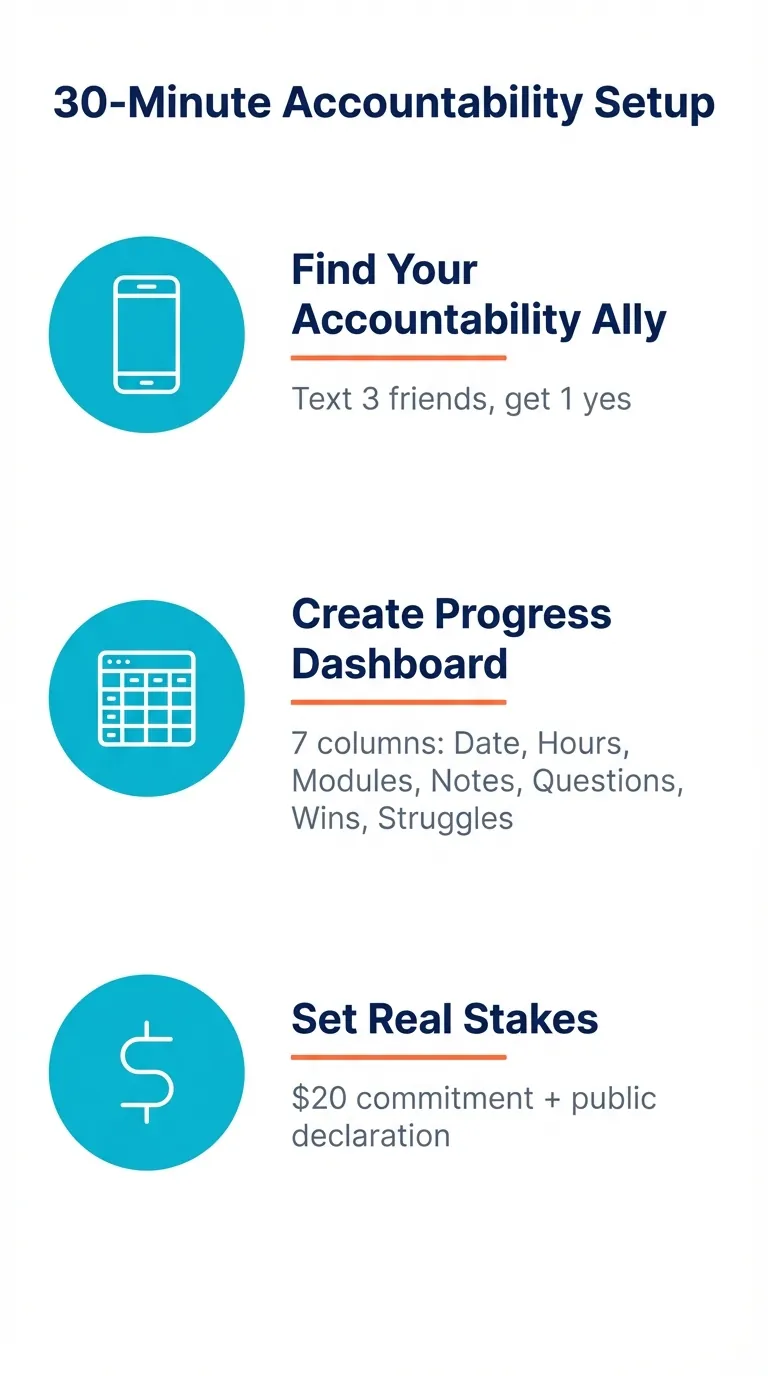
How to Establish Your Personal Accountability System in Half an Hour
When you transition to online learning, you forfeit the inherent accountability found in physical classrooms. Nobody's present to notice if you're tardy, and you can't exchange notes with peers. It’s just you, your computer, and a pile of lectures that you haven't quite gotten around to viewing.
I've witnessed it countless times: students grappling with this exact dilemma. There's that course - a continual reminder in your browser, almost taunting you. You paid for it. You want to see it through to the conclusion. Yet, without an external structure, online study habits disintegrate in mere weeks. The solution isn’t pure determination - it's constructing an accountability system customized to online learning, giving real significance to your choices. You need a setup where showing up becomes the path of least resistance. This is how you create one in just half an hour.
Get your phone out and message a few friends: "I'm enrolled in [course name]. Can we do brief 10-minute check-ins every Monday at 8pm for six weeks?" One will agree.
That's your accountability ally.
Share your weekly objectives openly.
Create Your Progress Dashboard
Whether it's a notebook or a Google Sheet, start with seven columns:
Date
Hours Studied
Modules Completed
Notes Taken
Questions Asked
Wins
Struggles
Keep track daily. Those who consistently track finish courses 3x more often.
Ensure your dashboard is visible - put it on your phone screen, bathroom mirror, or slap it on your laptop.
Implement Immediate Consequences That Matter
Holding yourself accountable for studying requires tangible stakes. Use platforms like Beeminder or StickK to wager $20, which you'll lose if you don't meet your weekly target. Give your accountability partner permission to share an embarrassing photo if you miss two check-ins. Public declarations work: tweet your course completion goal with #LearnInPublic. The fear of failing publicly provides motivation that vague objectives never will. I know someone who pledged $50 to a political party he detested every time he skipped a study session. He skipped just once.
Launch your 7-day accountability experiment: choose one strategy from each section, put it into practice in the next 30 minutes, and share the results of your first day’s progress with someone who will actually care.
The Major Accountability Mistakes Stalling Your Progress
Lack of discipline isn't why you're stumbling.
Most dive into virtual learning accountability plans with the same fleeting enthusiasm reserved for New Year's resolutions, fading fast by the second week. The issue isn't your willpower. It's attempting to apply accountability strategies crafted for traditional classrooms to the entirely different realm of remote learning.
The Futility of Solely Depending on Self-Accountability
I've seen countless online learners devise intricate systems to hold themselves responsible, only to watch them collapse within days. Why does this occur?
Our brains love to renegotiate our commitments when nobody's watching.
That tired feeling? That's when your internal negotiator strikes.
The Perfectionism Trap That Halts Your Start
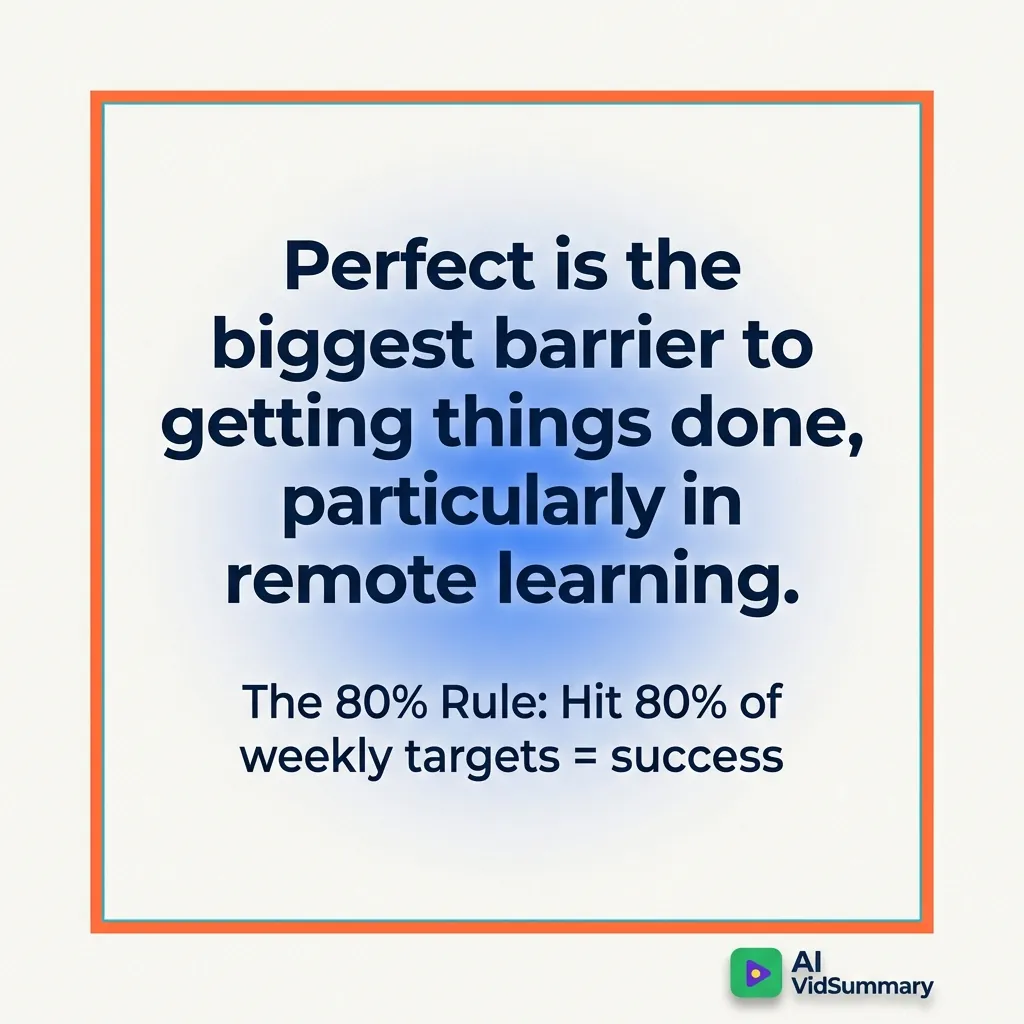
Perfectionist thinking sabotages online learning accountability more than any other issue. Missing one study session can make the whole system seem like a failure, leading you to quit. I've experienced this - crafted an immaculate 90-day learning plan, missed just day three, and abandoned the entire thing. But then came the 80% completion rule. If you hit 80% of your weekly targets, you're succeeding. Missing a session isn't a reset. It's simply being human, still on the right path. Consistency beats perfection in virtual learning, especially when life inevitably disrupts.
Perfect is the biggest barrier to getting things done, particularly in remote learning.
The 80% Rule: Overcoming Perfectionism in Remote Learning
Opting for Tools Instead of Systems
No app can create accountability by itself - they merely assist.
Many download a plethora of productivity apps, invest time in setting them up, only to never engage in the actual learning tasks. The tool becomes procrastination disguised as productivity.
Advanced Strategies When Basic Accountability Doesn't Function
You've attempted study groups. Set calendar reminders. Yet, courses remain unfinished.
It's time for drastic actions.
Drastic Actions for Persistent Course Dropouts
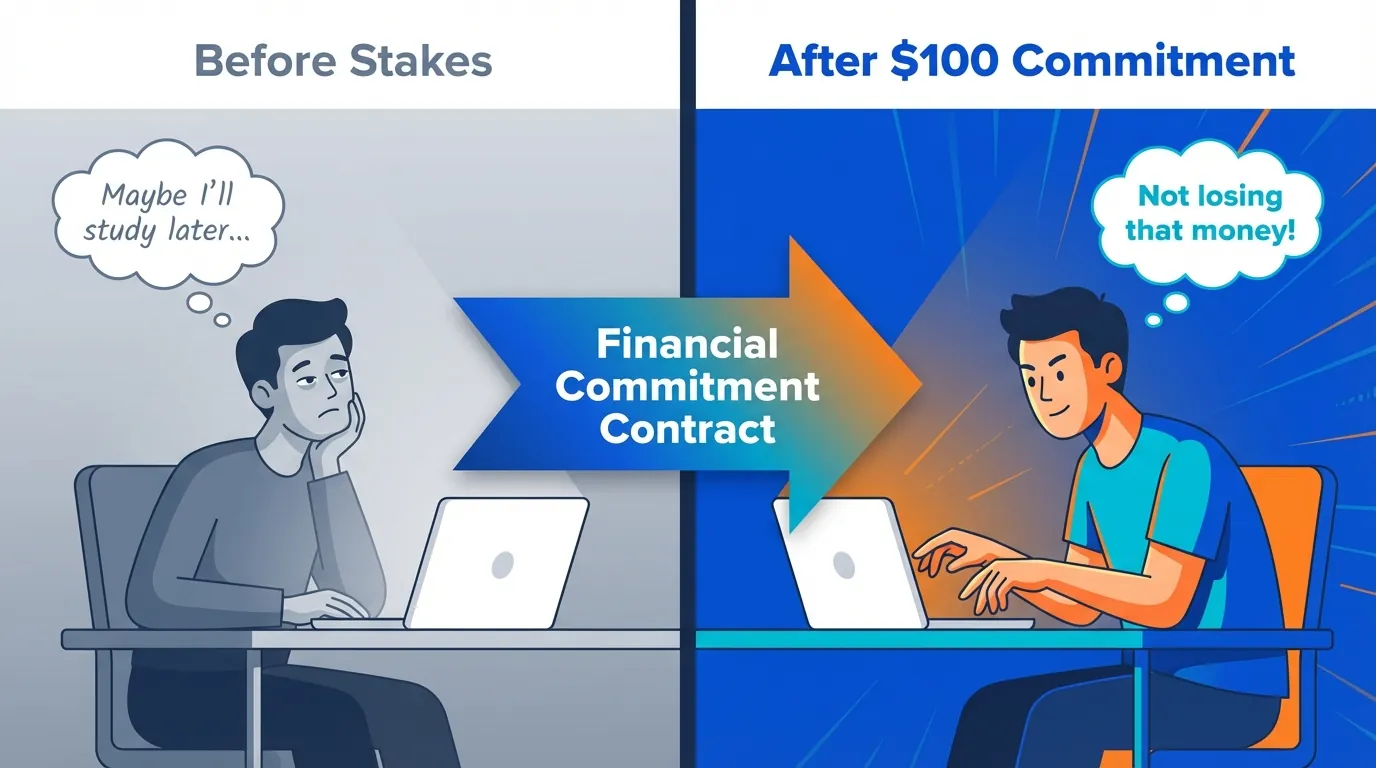
In my experience with hundreds of learners, many abandoned online courses even after "trying everything." They've never raised the stakes enough to counter their brain's preference for Netflix. That's where financial commitment contracts come in, leveraging loss aversion. People dislike losing money more than they enjoy gaining knowledge. Platforms like Beeminder or StickK let you put real cash on the line ($50-$200) and, trust me, excuses vanish quickly when actual dollars are threatened.
The psychology is straightforward: your brain won't allow a $100 loss for skipping a study session.
The Power of Financial Commitment: Before and After Motivation Transformation
This isn't about punishment - it's about establishing consequences that match how crucial you claim this learning is.
Creating Deadlines That Feel Real
Self-paced courses often mean "anytime" becomes "never." I've been there myself, after abandoning seven courses in 2024 alone. Consider utilizing a tech stack that includes habit trackers, focus timers, and tools like AI VidSummary to quickly extract actionable insights from videos. Public commitment works, too: share your completion deadline on social media, inform your manager about your new learning objective, or agree to teach what you learn to your team. Motivation in distance learning fades without external pressure, so create it. Set weekly objectives, publicly share your progress, and treat your self-imposed deadlines as seriously as work deadlines. Remote learning discipline significantly improves when you're under public scrutiny.
Deciding When to Quit or Continue
Not every course is worth finishing. Give it two solid weeks - if you're still forcing yourself through irrelevant or poorly structured material, it's time to move on. Stay accountable by differentiating between normal resistance (keep going) and misaligned courses (which do happen). Progressing means extracting one valuable insight before you move on, rather than enduring 40 hours of suffering.
Conclusion
So, you're armed with the fundamentals now. Three key supports:
External accountability - Your study companion or accountability ally
Internal accountability - Your tracking system
Immediate consequences - Making skipping painful
Consider this a 7-day accountability jumpstart. Day 1 has you selecting an accountability partner and establishing your first check-in. Day 2 is all about creating your tracking system, whether you utilize a spreadsheet, Notion, or even a physical planner. Schedule your study time like an unmissable appointment by Day 3. Day 4 is the moment for a complete study session, followed by immediate reflection on its effectiveness. On Day 5, share your progress openly with your accountability partner, concentrating on those challenging areas.
Here's the crucial part: Day 6 and Day 7 often see students quit.
Don't be that student. Day 6 is your chance to reflect, make adjustments to what’s struggling, and renew your commitment. Day 7 is about planning your study blocks for the upcoming week before Sunday concludes.
Your assignment for the next 24 hours? Message someone and invite them to hold you accountable for your online learning - do it now, not later when the thought fades. Recognizing you can't handle this alone isn't a weakness, it's a strategy.
Share this
About AI Vid Summary Team
We're a passionate team dedicated to transforming how people learn from video content. At AI Vid Summary, we combine cutting-edge AI technology with user-friendly design to help students, professionals, and lifelong learners extract maximum value from YouTube videos and online courses.
Our mission is to make education more accessible and efficient by providing instant, AI-powered summaries, smart note-taking tools, and interactive chat features that turn passive watching into active learning.