Which AI Is Better for Marketing: Gemini or ChatGPT?
📋 Video Summary
🎯 Overview
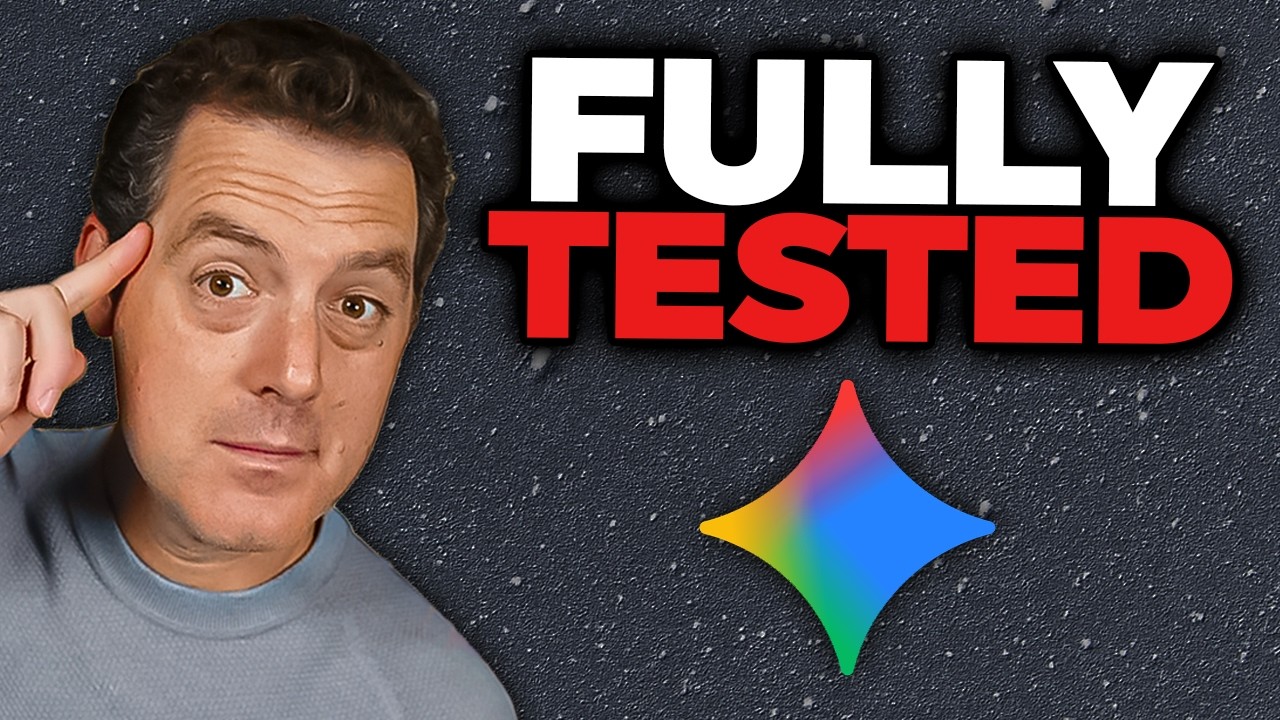
This video by Neil Patel discusses the competitive landscape between Google's Gemini and OpenAI's ChatGPT for marketing, emphasizing the strategic importance of choosing the right AI platform. The video highlights how the choice of AI impacts marketing costs, execution speed, and competitive advantage in the long run.
📌 Main Topic
The core theme is the strategic platform choice between Gemini and ChatGPT for marketing, emphasizing Google's structural advantages and the need for a platform-agnostic approach.
🔑 Key Points
- 1. Platform Choice Matters [0:00]
- Picking the wrong platform can lead to increased costs and reduced ROI.
- 2. OpenAI's "Code Red" and Google's Advantage [0:55]
- Google's structural advantage lies in its vast data, distribution, and hardware infrastructure.
- 3. Google's Data Advantage [2:43]
- This data provides unmatched training for its AI models. - Google processes over 13.7 billion searches per day, providing constant training data.
- 4. Google's Founder-Level Urgency and Hardware [3:32]
- Google is investing in proprietary hardware (TPUs) to process AI workloads more efficiently.
- 5. Business Model Differences [5:49]
- Google doesn't need Gemini to be directly profitable; it's a strategic asset to drive users into its ecosystem.
- 6. Google's Playbook: Ecosystem Domination [7:12]
- Examples: Gmail, Google Docs, Android, Google Maps.
- 7. Platform-Agnostic Strategy is Key [8:32]
- This provides an unfair advantage and allows for adapting to platform changes.
- 8. Practical Workflow Examples [8:56]
- SEO Content Workflow: Gemini for keyword research and SERP analysis, ChatGPT for content writing, and Gemini for title/metadata refinement. - Data Analysis/Reporting Workflow: Integrating data from various sources into Google Sheets, analyzing it with Gemini, and writing the report with ChatGPT.
- 9. Building a Future-Proof Marketing Operation [12:21]
- Build multimodal testing into your workflow. - Train your team on AI principles, not just platforms. - Build platform-agnostic documentation.
💡 Important Insights
- • OpenAI's Dependency: OpenAI relies on Microsoft for cloud infrastructure and Nvidia for chips, which is a structural disadvantage. [5:15]
- • Google's Ecosystem: Google's AI strategy is to keep users within its ecosystem, monetizing through ads, cloud, and enterprise tools. [6:24]
- • Exponential vs. Linear Improvement: AI is improving exponentially, making platform agility crucial. [13:34]
📖 Notable Examples & Stories
- • Mark Zuckerberg's reaction to Google's TPUs [4:40]
- • Gmail, Google Docs, Android, and Google Maps API: Examples of Google's strategy of free/cheap products to dominate an ecosystem. [7:12]
🎓 Key Takeaways
- 1. Prioritize platform strategy and treat it as a business decision.
- 2. Adopt a multimodal approach using multiple AI tools to maximize strengths.
- 3. Focus on training your team on AI principles and building flexible workflows.
✅ Action Items (if applicable)
□ Evaluate your current AI dependencies and platform lock-in risks. □ Implement multimodal testing across different AI platforms. □ Train your team on AI principles and prompt engineering. □ Document all workflows in a platform-agnostic manner.
🔍 Conclusion
The video emphasizes that the future of marketing relies on a strategic, platform-agnostic approach to AI. By leveraging the strengths of both Gemini and ChatGPT, and building a flexible, data-driven marketing operation, businesses can gain a sustainable competitive advantage in the rapidly evolving AI landscape.
Create Your Own Summaries
Summarize any YouTube video with AI. Chat with videos, translate to 100+ languages, and more.
Try Free Now3 free summaries daily. No credit card required.
Summary Stats
What You Can Do
-
Chat with Video
Ask questions about content
-
Translate
Convert to 100+ languages
-
Export to Notion
Save to your workspace
-
12 Templates
Study guides, notes, blog posts

![Strategic Communication Skills for All Professionals Training [2 HOURS FULL COURSE]](https://img.youtube.com/vi/zB2QmHLMylo/maxresdefault.jpg)